

Best Plants for a Texas Sunroom: Your 2026 Growing Guide
- Haylee McCloud
- Mar 20
- 14 min read

Updated: Apr 3
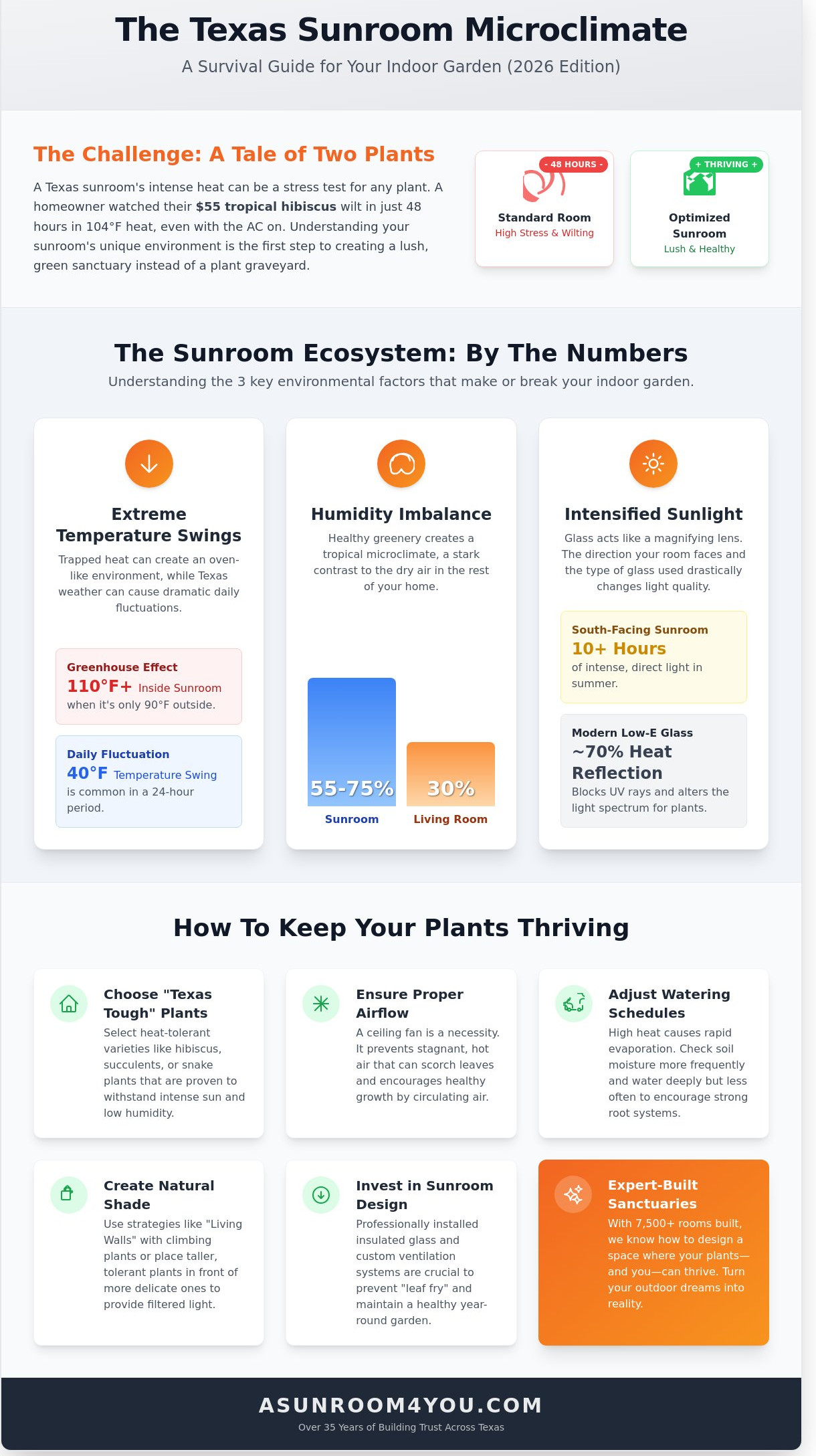
Last August, a homeowner in San Antonio watched their $55 tropical hibiscus shrivel in just 48 hours. Even with the AC running, the 104-degree heat turned their beautiful glass enclosure into a stress test for every leaf. Finding the best plants for a Texas sunroom shouldn't feel like a losing battle against the elements. You want a lush, green sanctuary that adds value to your home, not a graveyard of expensive mistakes and skyrocketing water bills.
We agree that your sunroom should be a place of relaxation, not a chore list. After building over 7,500 rooms across the state, we've seen which greenery actually survives the unique intensity of a Texas summer. This 2026 guide promises to show you the hardiest, most stunning plants that thrive from Austin to the Hill Country. We'll preview the top heat-resistant varieties, tips to stop spider mites in their tracks, and ways to improve your indoor air quality without doubling your utility costs. It's time to make your indoor garden feel right at home.
Key Takeaways
Understand the "magnifying effect" of glass on solar radiation and how to manage the unique microclimate of your indoor ecosystem.
Discover the best plants for a Texas sunroom by choosing "Texas Tough" varieties that thrive in high heat and low humidity.
Learn essential care tips, including why ceiling fans are a necessity for airflow and how to adjust watering schedules to combat rapid evaporation.
Explore design strategies like creating "Living Walls" to provide natural shade and enhance the architectural beauty of your glass-enclosed sanctuary.
Find out how professional insulated glass and custom ventilation systems prevent "leaf fry" and ensure your indoor garden stays healthy year-round.
Table of Contents The Unique Microclimate of a Texas Sunroom The Best Heat-Tolerant Plants for Your Texas Sunroom Essential Care Tips for Sunroom Plants in Central Texas Designing Your Green Sanctuary: Layout and Aesthetics How Your Sunroom Design Impacts Plant Health
The Unique Microclimate of a Texas Sunroom
A sunroom is more than just an extension of your home; it's a specialized environment that functions as a bridge between your climate-controlled interior and the rugged Texas elements. At ASunroom4You, we've spent over 35 years of trust building these spaces across the state. We know that The Unique Microclimate of a Texas Sunroom dictates exactly which species will thrive and which will struggle. This ecosystem is a hybrid. It offers the protection of four walls while providing light levels that far exceed any other room in your house. Finding the best plants for a Texas sunroom starts with understanding how glass changes the nature of sunlight.
The magnifying effect of glass is a primary factor in this environment. While your plants are shielded from the wind, the glass panels can intensify solar radiation, creating a greenhouse effect. In a typical San Antonio sunroom, humidity levels often hover between 55% and 75% when the space is filled with healthy greenery. Compare this to a standard living room where central air conditioning strips moisture away, often leaving the air at a bone-dry 30% humidity. This extra moisture is a blessing for tropical varieties, but it requires careful management to prevent mold. It's also why "Full Sun" outdoors isn't the same as "Full Sun" behind glass. Outdoor plants deal with moving air and UV exposure, while sunroom plants face static, concentrated heat that can scorch leaves if you aren't prepared.
Light Levels: Direct vs. Filtered Sun
The direction your sunroom faces changes everything for your indoor garden. A South-facing sunroom in a city like Austin receives up to 10 hours of intense, direct light during the summer. Conversely, a North-facing room provides consistent, indirect light that's much cooler. Most of our 7,500 rooms built in Texas feature modern Low-E glass coatings. These coatings are designed to reflect roughly 70% of solar heat and block harmful UV rays, which protects your furniture but also changes how plants eat. Photosynthetically Active Radiation represents the specific spectrum of light between 400 and 700 nanometers that fuels plant growth within a glass enclosure. Because Low-E glass filters the light spectrum, you might find that high-energy plants need to be placed closer to the glass than they would in an older, non-coated room.
Temperature Fluctuations in the Lone Star State
Central Texas is famous for 40-degree temperature swings within a single 24-hour period. You might wake up to a crisp 45°F morning and see the thermometer hit 85°F by mid-afternoon. Inside a sunroom, these shifts are even more dramatic. Without proper ventilation, trapped heat can easily reach 110°F by 2:00 PM, even when it's only 90°F outside. This heat can be a death sentence for temperate plants that prefer steady temperatures. However, desert species and many tropicals enjoy the daytime heat as long as the humidity is right. The nighttime cooling is actually beneficial for many flowering species, as the drop in temperature signals the plant to enter its natural metabolic rest cycle. We believe there is a sunroom for every budget, and understanding these thermal patterns ensures your investment becomes a thriving sanctuary rather than a heat trap. We've seen thousands of homeowners turn their outdoor dreams into reality by matching their plant choices to these specific temperature cycles.
The Best Heat-Tolerant Plants for Your Texas Sunroom
Texas sunrooms often face temperatures exceeding 105 degrees during a typical August afternoon. Choosing the
best plants for a Texas sunroom
requires looking beyond basic indoor varieties; you need 'Texas Tough' selections that handle both heat and the low humidity often found inside glass enclosures. A common misconception is that every succulent loves intense, trapped heat. In reality, stagnant air in a glass room can reach 120 degrees, which might blister even a hardy cactus if there isn't enough airflow. Our team has spent 35 years building over 7,500 rooms across the state, and we've seen which greenery truly lasts.
For homeowners looking for reliable container options, the Lady Bird Johnson Wildflower Center offers an excellent list of Heat-Tolerant Plants for Your Texas Sunroom that adapt well to localized climate challenges. These selections are proven to withstand the intense light levels found in our San Antonio and Austin installations. When selecting the best plants for a Texas sunroom, you should prioritize species that don't mind the dry air created by home cooling systems.
Tropical Favorites for High-Humidity Enclosures
Hibiscus brings an immediate tropical feel with vibrant blooms that can appear year-round in a temperature-controlled space. Its deep green foliage stays lush even when the afternoon sun is at its peak. Bird of Paradise is a fantastic choice for sunroom corners because its large, structural leaves provide dramatic height without requiring a massive footprint. If you have a screen room or a space with vertical supports, Mandevilla is a top performer. These climbing vines use vertical space efficiently and produce trumpet-shaped flowers throughout the entire summer season.
Creating this kind of tropical paradise at home often inspires thoughts of the real thing. If your sunroom has you dreaming of your next luxury vacation, you can check out The Russell Travel Team (Lightning Travel) for curated leisure travel experiences.
Desert Gems: Succulents and Cacti
Aloe Vera and Agave are the ultimate low-maintenance partners for a busy homeowner. They store water in their thick leaves, which means they won't wilt if you miss a watering during a hectic week. Snake Plants are often called 'indestructible' because they thrive in the filtered light typical of many modern glass roof designs. For a burst of vibrant color, Bougainvillea is virtually unmatched in a high-heat environment. To manage its aggressive growth in a controlled room, keep it in a slightly smaller pot to restrict the root system and encourage more flowers.
Edible Sunroom Gardening
Meyer Lemons are a sunroom staple because they crave the consistent, bright light that a glass roof provides. These trees can produce fragrant fruit even in medium-sized containers, making them a practical addition to your home. Herbs like rosemary and basil transform your sunroom into a kitchen-adjacent 'scent sanctuary' while thriving in the warmth. To ensure your citrus thrives, use a pot at least 14 inches in diameter to provide enough soil mass to prevent root scorching from intense floor-level heat.
Creating a beautiful indoor garden is much easier when your space is designed specifically for the Texas climate. If you're ready to see how a custom-designed space can improve your quality of life, our experienced designers can help you create the perfect environment for both you and your plants.
Essential Care Tips for Sunroom Plants in Central Texas
Living in Central Texas means dealing with intense solar gain that can turn a beautiful glass room into a high-performance greenhouse. With over 35 years of experience building these spaces, we know that the best plants for a Texas sunroom require a specific care routine to handle 100-degree summer days. The glass allows for incredible views, but it also accelerates natural processes like evaporation and transpiration. If you don't adjust your habits, your greenery will show signs of stress within 48 hours of a heatwave.
Watering and Humidity Management
Most homeowners struggle with hydration because evaporation happens 40% faster in a sunroom than in a traditional living room. While the "Finger Test" is a reliable method for small 6-inch pots, it often fails for larger 14-inch decorative containers. The top inch of soil might feel dry while the root ball remains soaked. We recommend using a digital moisture meter for any pot deeper than 8 inches to ensure you aren't drowning the roots.
Self-watering pots are an excellent investment for a high-heat environment. These containers use a sub-irrigation reservoir that allows the plant to drink as needed, which is vital when San Antonio or Austin humidity drops below 20% inside an air-conditioned space. To provide an extra boost, place your pots on pebble trays filled with water. As the water evaporates, it creates a localized humid microclimate around the foliage. For more detailed guidance on managing container health in our climate, check out these Essential Care Tips for Sunroom Plants from the experts at Texas A&M AgriLife Extension.
Ceiling fans are a non-negotiable feature for a healthy Texas sunroom. Stagnant air leads to heat pockets that can scorch delicate leaves even if the AC is running. We suggest keeping your fans on a medium setting for at least 12 hours a day. This constant movement prevents powdery mildew and discourages pests like spider mites. These tiny arachnids thrive in dry, hot, still air. If you notice fine webbing or yellow stippling on your leaves, it's a sign your airflow is insufficient.
Since plants naturally grow toward their light source, your sunroom garden will eventually start leaning toward the glass at a 15-degree angle if left alone. To maintain a symmetrical, upright shape, rotate every pot 90 degrees every two weeks. This simple habit ensures that all sides of the plant receive equal UV exposure, preventing the "leggy" look that often ruins the aesthetic of the best plants for a Texas sunroom.
Fertilizing for Year-Round Growth
Because the light levels in a sunroom stay consistently high, your plants will have a much higher metabolic rate than standard houseplants. They're hungrier and require more frequent feeding. Use a balanced 10-10-10 N-P-K fertilizer every two weeks during the spring. If you're growing flowering varieties like Hibiscus or Mandevilla, switch to a 15-30-15 "bloom booster" formula to encourage vibrant colors.
High-heat periods in July and August require a change in strategy. Never fertilize when the temperature inside the room exceeds 95 degrees. Adding nutrients to a heat-stressed plant can lead to root burn, causing the plant to drop its leaves as a defense mechanism. Wait for a break in the weather or apply a highly diluted liquid fertilizer early in the morning when the room is at its coolest point. This practical approach keeps your indoor sanctuary lush without risking chemical shock.
Designing Your Green Sanctuary: Layout and Aesthetics
Your sunroom is more than just glass and frames; it's a structural canvas for your lifestyle. With over 7,500 rooms built across Texas, we've seen how a thoughtful layout transforms a simple patio enclosure into a true retreat. You should use tall, architectural plants like Bird of Paradise or Lady Palms to soften the corners of your extruded aluminum frames. This design choice draws the eye upward and highlights the vaulted ceilings common in our custom sunroom designs. It creates a seamless flow between your indoor comfort and the outdoor landscape you love. Ensuring that outdoor view is just as stunning is where professional landscaping comes in. While we build sunrooms in Texas, the principles of great design are universal, and looking at the work of established companies like Ray Lawns in Tennessee can offer great inspiration for your own backyard.
Living walls are another powerful tool for the savvy homeowner. Vertical gardens aren't just for looks. A dense wall of foliage acts as natural insulation for your living space. In a San Antonio July, a thick leafy barrier can lower the surface temperature of an interior wall by 8 degrees compared to bare glass. This helps your cooling system work more efficiently while providing a lush, vibrant backdrop for the best plants for a Texas sunroom. It's a practical solution that pays off in both beauty and lower utility bills.
Maximize your square footage by thinking vertically. Most sunrooms average between 200 and 400 square feet, so floor space is valuable. You can use tiered shelving or hanging macramé planters to keep the floor clear for walking paths. When selecting containers, choose materials that complement the maintenance-free finishes of your room. High-quality resin or glazed ceramic pots are ideal because they don't sweat or leak. This protects your investment and keeps your sanctuary looking pristine with minimal effort.
Furniture and Plant Integration
Choose furniture with a 1,000-hour UV rating to ensure your chairs and tables don't fade under the intense Texas sun; collections from modern specialists like ReModern Living often feature durable materials perfect for these bright spaces. You can create a dedicated reading nook by clustering high-oxygen producing plants like Snake Plants or Peace Lilies around a comfortable recliner. These species are proven to remove common toxins from the air, making your relaxation time healthier. Watch out for weight limits on your flooring. A large 20-gallon ceramic pot filled with wet soil can weigh over 150 pounds. Use rolling plant dollies to distribute this weight and prevent moisture from being trapped against your floor finishes.
Seasonal Transitions: Summer vs. Winter
Texas weather is notoriously unpredictable. A "Blue Norther" cold front can drop local temperatures by 30 degrees in less than two hours. During these winter snaps, move your tropical varieties at least 12 inches away from the glass to prevent cold shock. In the peak of summer, do the opposite by moving sensitive ferns away from the direct afternoon glare. Installing thermal shades can reduce solar heat gain by 75% during a record-breaking August heatwave. This protection ensures your investment in the best plants for a Texas sunroom remains vibrant regardless of the season. Planning for these shifts keeps your garden flourishing year-round.
Ready to create your own year-round garden? Schedule your FREE in-home survey today and let us help you design the perfect space for your plants and your family.
How Your Sunroom Design Impacts Plant Health
The architectural choices you make for your home addition directly dictate whether your indoor garden thrives or merely survives. Many homeowners don't realize that standard glass can actually harm delicate foliage by acting like a magnifying glass during July and August. Our insulated glass technology acts as a high-performance shield; it prevents the leaf fry that occurs when intense Texas sun turns a room into an oven. By filtering out up to 85% of solar heat gain while still allowing visible light through, we ensure your greenery stays vibrant without the scorched edges common in lesser builds.
Airflow is the secret to a healthy indoor ecosystem. Without custom ventilation, lush spaces quickly become breeding grounds for mold and mildew. We design our rooms with integrated venting systems and high-quality screens that facilitate consistent CO2 exchange. This keeps humidity levels balanced, which is vital when you're cultivating the best plants for a Texas sunroom like humidity-loving ferns or exotic orchids. Stagnant air is a plant's worst enemy; our designs ensure a gentle, consistent breeze moves through the space even on the hottest San Antonio afternoons.
A DIY kit might seem like a bargain at first glance, but these structures often lack the structural integrity needed for long-term plant health. We've seen DIY seals fail in as little as 24 months, leading to drafts that shock tropical species during a sudden North Texas cold snap. A professional build from ASunroom4You uses heavy-duty extrusions and commercial-grade seals designed to last 30 years or more. This stability creates a predictable microclimate, allowing you to invest in expensive or rare specimens with total confidence.
Light placement is everything for a serious hobbyist. We help you position your room to capture the exact spectrum your specific plants require. A south-facing room provides 10 to 12 hours of intense light for sun-loving succulents and citrus trees. Conversely, an eastern exposure offers the soft, morning glow preferred by delicate African Violets. Our experts analyze your lot and your gardening goals to ensure the structure is oriented for maximum success.
The ASunroom4You Difference: Built for Texas
With over 35 years of trust and more than 7,500 rooms built across San Antonio and Austin, we understand the unique demands of the Texas climate. We don't just build rooms; we create a sanctuary for your family and your flora. Our custom-designed patio enclosures use maintenance-free materials like high-grade vinyl and aluminum. You won't spend your weekends scraping paint or worrying about termites. Instead, you can focus entirely on your gardening hobby in a space that's guaranteed to last.
Start Your Green Journey Today
Your dream garden is much closer than you think. Take a moment to browse our "Before and After" gallery to see how other Texas homeowners have transformed their tired patios into lush, green retreats. When you're ready to take the next step, we provide a FREE in-home survey to evaluate your light conditions and backyard layout. Our team will help you plan a space that accommodates the best plants for a Texas sunroom while staying within your specific budget. Schedule your free sunroom survey today!
Start Growing Your Texas Oasis Today
Your sunroom should be more than just extra square footage. It's a sanctuary where you and your greenery thrive together. By choosing the best plants for a Texas sunroom, such as heat-loving succulents or tropical hibiscus, you turn a bright space into a living masterpiece. Success in 2026 depends on managing the Central Texas heat through proper ventilation and strategic layout. We've spent 35+ years of trust in Texas helping homeowners solve these exact challenges. With over 7,500 rooms built across the state, we know how to create the perfect climate for both your family and your foliage. Whether you want a lush jungle or a minimalist retreat, we provide a custom design for every budget that ensures your plants stay vibrant all year long. Don't let another season pass with an empty patio when you can enjoy a temperature-controlled garden instead. Our team is ready to help you build a space that feels right at home.
Request Your FREE In-Home Sunroom Survey Today!
You deserve a beautiful, sun-drenched space where your favorite plants can finally reach their full potential and bring joy to your daily routine.
Frequently Asked Questions
Can I grow vegetables in my Texas sunroom year-round?
You can grow vegetables in your Texas sunroom every day of the year if you maintain a temperature between 65 and 85 degrees. Cherry tomatoes, kale, and peppers flourish in 10-inch pots when they receive 6 hours of direct light. Our custom designs ensure your harvest stays protected from the 100-degree Texas heat. It's the perfect way to improve your quality of life with fresh food from your own indoor garden.
How do I prevent my sunroom from getting too hot for my plants?
Installing High-Performance Low-E glass is the most effective way to block 95 percent of harmful UV rays and reduce solar heat gain. We also recommend using ceiling fans to keep air moving at 5 miles per hour to prevent stagnant heat. Over 35 years of trust has taught us that proper ventilation keeps your room 10 to 15 degrees cooler. This creates a sanctuary where your plants can flourish without wilting.
What are the best low-maintenance plants for a San Antonio sunroom?
Snake plants, ZZ plants, and jade are the best plants for a Texas sunroom because they only require watering once every 14 days. These hardy species thrive in the San Antonio humidity and don't mind if the temperature fluctuates. We have helped 7,500 homeowners build spaces where these low-maintenance plants look beautiful year-round. They are affordable options that offer a high value for busy families.
Do I need special glass in my sunroom to grow tropical plants?
High-quality insulated glass is essential for tropical plants because it maintains the 60 percent humidity levels they require to survive. Standard single-pane glass often allows too much heat transfer; this can shock sensitive hibiscus or orchids. Our 2024 glass specifications include double-strength panes that are 1/8 inch thick. This technology ensures your tropical oasis stays lush and green regardless of the weather outside.
Why are the leaves on my sunroom plants turning brown and crispy?
Brown, crispy edges usually indicate leaf scorch or a lack of humidity when temperatures exceed 95 degrees. If your pots sit within 2 feet of the glass, the intense Texas sun can burn delicate foliage in under 4 hours. You should move these plants back, install solar shades to filter the light, or explore Residential Window Tinting for a more permanent solution. Increasing the moisture in the air by 20 percent will also stop the leaves from drying out.
Is a screen room or a glass sunroom better for a plant lover?
A glass sunroom is the superior choice for a plant lover because it provides 100 percent protection from frost and pests during all 4 seasons. While screen rooms offer great airflow, they won't protect your best plants for a Texas sunroom when the temperature drops to 30 degrees in January. Our glass enclosures provide a controlled environment where you can enjoy the outdoors without the bugs. It's a guaranteed way to protect your investment.
How often should I fertilize plants that live in a four-season room?
You should fertilize your sunroom plants once every 30 days from March through October when they are actively growing. Use a liquid fertilizer diluted to 50 percent strength to avoid salt buildup in the soil. During the shorter days of November and December, you can stop feeding them entirely. This schedule ensures your indoor garden stays vibrant and healthy throughout the entire 12-month calendar.


Comments