
Patio Cover Footing Requirements: A Homeowner’s Guide to Structural Safety
- Haylee McCloud
- 3 days ago
- 13 min read

Your new patio cover is more than just a place for shade; without the right foundation, it's essentially a giant sail waiting for the next Texas windstorm to pick it up. It is natural to feel a bit overwhelmed when you start looking into patio cover footing requirements and local building permits. You want a beautiful outdoor retreat, not a legal headache or a safety hazard that keeps you up at night when the clouds turn grey. We understand that the fear of structural failure or the anxiety over unexpected foundation costs can take the joy out of your home improvement plans.
We're here to help you move forward with confidence. In this guide, you'll learn the essential rules for ensuring your outdoor space is safe, permit-ready, and built to last for decades. We will preview the latest 2024 building codes, explain when an existing slab might suffice, and look at the specific wind load requirements for our local Texas communities. By the end, you'll have a clear plan for a professional installation that turns your backyard into the reliable sanctuary you've always wanted.
Key Takeaways
Understand how footings act as essential anchors that manage both gravity and the powerful upward force of Texas winds.
Learn the standard patio cover footing requirements, including why industry depths often range between 12 and 24 inches.
Discover why a typical 4-inch residential concrete slab usually isn't enough to support a new structure without professional evaluation.
Identify the specific wind load challenges in the San Antonio and Austin corridors and how they affect your patio cover's design.
Find out how a detailed site survey ensures your project is permit-ready and built to withstand local environmental conditions.
Table of Contents
What Are Patio Cover Footings and Why Are They Essential?
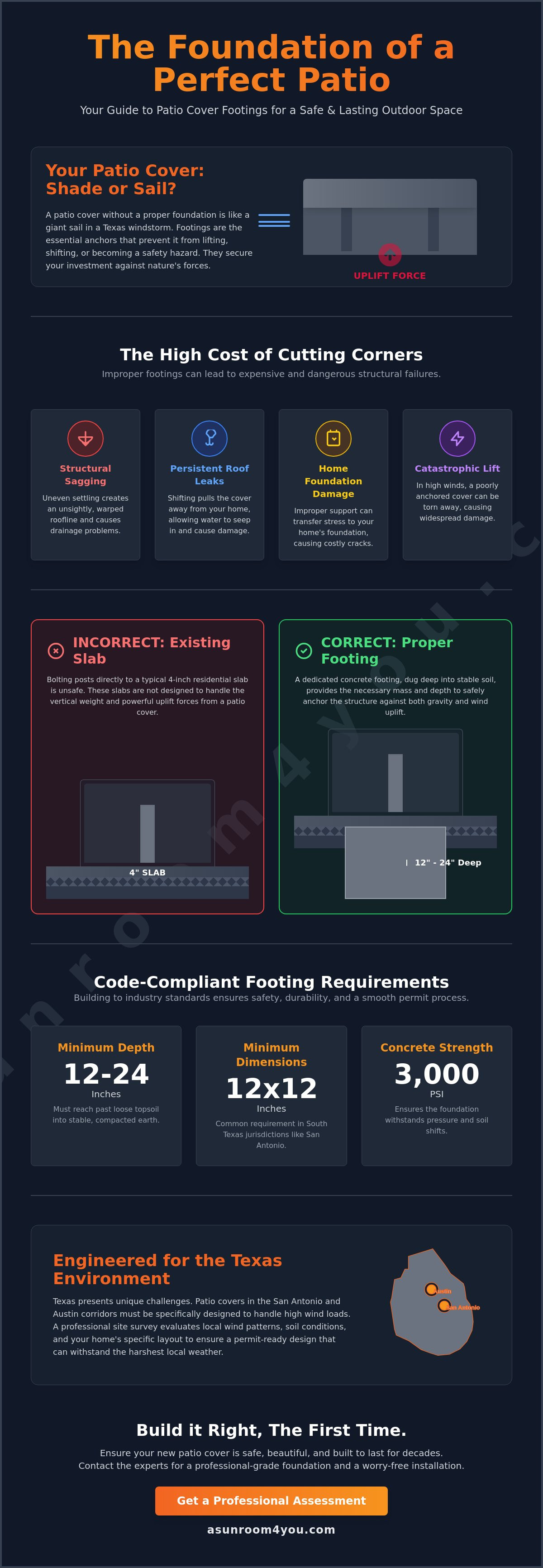
Imagine your patio cover as a giant umbrella. On a calm day, it provides perfect shade and a comfortable place to relax. But when a Texas thunderstorm rolls in, that same structure can quickly become a sail. This is why meeting specific patio cover footing requirements is the most critical part of your project. Footings are the underground concrete supports that distribute the weight of the structure. They don't just hold the roof up; they hold the whole thing down.
The relationship between the size of your posts, the weight of the roof, and the volume of the footing is a precise science. If the footing is too small or too shallow, the structure can shift, lean, or even lift off the ground entirely. Many people make the mistake of assuming they can simply bolt a new cover onto an existing 4-inch concrete slab. In reality, those slabs aren't designed to handle vertical loads. Proper Foundation (engineering) techniques require digging deep enough to reach stable soil and providing enough mass to counteract the forces of nature.
Gravity Loads vs. Lateral and Uplift Forces
Your patio cover deals with two main types of pressure. First, there is the gravity load, which is the constant downward weight of the lumber, shingles, and hardware. Footings transfer this weight into the ground so your posts don't sink into the dirt over time. Second, and often more dangerous in our region, is uplift. When wind gets under a solid roof, it creates an incredible amount of upward force. Without deep, heavy footings to act as an anchor, a strong gust can literally rip the posts right out of the ground, turning your investment into a safety hazard.
The Consequences of Improper Footing Installation
Cutting corners on your foundation might seem like a way to save on costs, but it often leads to expensive repairs down the road. Common issues include:
Structural Sagging: If one footing settles more than the others, your roofline will become uneven, leading to unsightly gaps and drainage problems.
Persistent Roof Leaks: Even a tiny amount of shifting can pull the cover away from your home's siding, causing water to pour into the joint during rain.
Foundation Damage: If an attached cover isn't supported correctly, it can put undue stress on your home's main foundation, leading to structural cracks that are incredibly costly to fix.
Catastrophic Lift: In extreme wind events, poorly anchored covers can be torn away, causing major damage to your house and anything in the path of the flying debris.
We believe in doing the job right the first time so you can enjoy your outdoor space without worry. Ensuring your patio cover footing requirements are met is the only way to guarantee a structure that is safe, permit-ready, and built to last for decades.
Standard Patio Cover Footing Requirements and Dimensions
Meeting patio cover footing requirements isn't just about digging a hole and filling it with concrete. It's about precision. For most residential projects, the industry standard for depth typically falls between 12 and 24 inches. In many South Texas jurisdictions, including San Antonio, local codes often specify a minimum 12x12 inch footing to ensure the structure stays put. The strength of the materials matters just as much as the size. You should always use a concrete mix with a rating of at least 2,500 to 3,000 PSI to prevent the foundation from crumbling under pressure or during soil shifts.
Guidelines for these dimensions are often adapted from the International Building Code (IBC), which provides the engineering baseline for design loads and height limitations. Following these standards keeps your home safe and ensures your project passes inspection without delays. While square spread footings are common for heavy loads, many builders prefer round pier footings because they are easier to dig and provide excellent stability against shifting soil.
Determining the Correct Footing Depth
Even though we don't deal with deep freezes in Texas, the frost line still serves as a guide for soil stability. A footing must reach past loose topsoil into compacted, stable earth. The height of your cover also changes the math. A taller roof creates more leverage against the ground, requiring a deeper anchor to prevent leaning. If you're building an attached cover, the footings must be designed to work in harmony with your home's existing foundation. Freestanding pavilions, on the other hand, need to be entirely self-sufficient in their stability to prevent the structure from walking or tipping during high winds.
Calculating Footing Diameter Based on Post Load
The diameter of your footing depends on how many pounds each post is expected to carry. This is calculated using the tributary area, which represents the square footage of the roof that rests on a single post. A heavy cedar roof will require a much wider footing to distribute that weight than a lightweight aluminum cover. For most standard builds, you'll see round pier footings ranging from 8 to 18 inches in diameter. If you aren't sure which dimensions are right for your specific soil type, you can schedule a professional site survey to get an accurate assessment of your backyard's needs.
Can You Build on an Existing Concrete Patio?
It's the most common question we hear from homeowners: "Can I just use the concrete I already have?" While it would be convenient, the reality is that most residential patios are just 4-inch-thick floating slabs. They're designed to support the weight of a grill and some patio furniture, not the heavy vertical loads of a permanent roof structure. To meet modern patio cover footing requirements, your foundation needs to do more than just sit on top of the dirt. It has to reach deep into the soil to provide the stability needed to keep the structure level and secure.
Before you start building, you have to evaluate what's currently under your feet. We look for specific red flags, such as existing cracks or "spalling" where the concrete surface is flaking away. If a slab is already cracking under its own weight, it certainly won't hold up a new sunroom or patio cover. We also check for reinforcement like rebar. In some rare cases, a slab might have been built with a "thickened edge" or pre-installed structural piers. If your original builder planned ahead with a 12-inch deep reinforced perimeter, you might be in luck. However, for the vast majority of Texas homes, a standard patio is simply a thin ribbon of concrete that requires professional modification.
The Risks of Bolting Directly to Unreinforced Concrete
Bolting a heavy post directly to a thin slab is a recipe for disaster. When the wind picks up, it creates an incredible amount of uplift. A standard wedge anchor in four inches of unreinforced concrete can simply pop out, or worse, take a large chunk of your patio with it. This creates permanent damage that is difficult to patch. Beyond the physical risks, there's a significant legal liability. If you perform non-permitted work on an insufficient foundation, it can become a major hurdle when you try to sell your home. Home inspectors are trained to spot these shortcuts, and they'll flag the structure as a safety hazard.
The Professional Solution: The Cut-Out Approach
The good news is that you don't have to tear up your entire backyard to do things the right way. We use a "Cut and Pour" method that is both efficient and structurally sound. Our teams use industrial-grade concrete saws to create precision openings exactly where the support posts will stand. We then dig through the old slab and into the earth to create a proper footing that meets all patio cover footing requirements. Once the new concrete is poured, we can tie it into the existing slab to ensure everything remains stable. This approach provides a rock-solid foundation while keeping the rest of your patio intact and looking great.
Engineering for the Texas Environment: Wind and Soil
Texas weather is famously unpredictable. One day it's calm, and the next, a storm brings gusts between 90 and 115 mph. In cities like San Antonio and Austin, building codes are designed to handle these specific wind loads. When you install a solid roof structure, you're essentially creating a giant wing in your backyard. This is known as the "sail effect." Because solid roofs catch every bit of air pressure, the wind tries to lift the entire structure off the ground. Meeting patio cover footing requirements is the only way to ensure your outdoor retreat doesn't end up in your neighbor's yard after a heavy storm.
The soil beneath your feet is just as challenging as the wind above. Most of Central and South Texas sits on expansive clay soil. This ground acts like a sponge; it swells when it rains and shrinks during our hot, dry summers. This constant movement can "heave" shallow footings, causing your patio cover to become unlevel or even pulling it away from your home's siding. Understanding the local patio cover footing requirements is essential for managing this shifting ground. A site-specific survey is the first step in identifying exactly what kind of foundation your property needs to stay stable for years to come.
Managing Expansive Soil in San Antonio and Austin
Clay soil doesn't just move; it exerts massive pressure on anything buried within it. If your footings are too shallow, they'll ride the waves of the soil's moisture cycle. To prevent this, we dig deeper to reach soil that maintains a more consistent moisture level. In particularly difficult areas, we may recommend "bell-bottom" piers. These footings are wider at the base than the top, acting like an anchor that the soil cannot easily push upward. This professional approach keeps your structure stable regardless of the season, protecting your investment from the ground up.
Permit Requirements and Local Building Departments
Navigating local regulations can be a headache for many homeowners. San Antonio Development Services has different criteria than the Austin Building Department, but both prioritize structural safety. For any attached patio cover, you'll almost certainly need a sealed engineering plan. This document proves that your design can handle the local environmental stressors. Building departments are strict because they want to ensure the safety of your family. It's vital that you don't pour any concrete until a city official has inspected the holes. If you pour too early, the inspector can't verify the depth, and you might be forced to dig them out and start over.
To make sure your project starts on the right foot, request a professional site survey today to evaluate your soil and wind load needs.
The ASunroom4You Difference: Professional Grade Foundations
Building a structure that lasts requires more than just high-quality materials; it requires a deep understanding of the land it sits on. With over 35 years of experience building in South Texas, we've seen exactly what happens when patio cover footing requirements are ignored. We've spent decades navigating local building codes and perfecting foundations that stand up to the most intense Texas weather. Our team doesn't just build; we engineer for the local landscape. This longevity isn't just a number. It's a promise of stability and reliability for your home.
We don't guess. We measure. Every project begins with a comprehensive site survey where we evaluate your specific soil conditions, wind exposure, and existing concrete. We take the guesswork out of the equation to ensure your patio cover or sunroom is anchored exactly as it should be. By providing custom-engineered solutions for every style of cover, we give you the peace of mind that comes with a permit-approved, professionally installed structure. You won't have to worry about shifting posts or sagging roofs when the seasons change.
Our Proven Process for Patio Cover Foundations
Our journey together starts with a free in-home survey to look at the physical layout of your backyard. Once we understand your vision, our team moves into a structural engineering review. We design your footings to exceed standard patio cover footing requirements, ensuring they can handle both the weight of the roof and the uplift of heavy winds. We handle the entire permitting and inspection process for you. You won't have to spend your afternoon waiting at a city office or trying to decode complex building criteria.
Quality control is at the heart of everything we do. We use high-strength concrete mixes and professional-grade anchors that are designed for permanent residential use. Our crews are trained to maintain the highest standards during the pour and installation. This attention to detail ensures that your foundation remains rock-solid for as long as you own your home. We treat your property with the respect it deserves, leaving you with a clean, finished space that's ready for relaxation.
Invest in Longevity and Home Value
A properly footed patio cover is an investment that pays off in the long run. When you choose a professional installation, you're increasing your home's resale value. Potential buyers look for structures that are permit-ready and built to last. A "DIY" cover with insufficient footings can actually decrease your home value or become a liability during an inspection. Our "no-maintenance" promise means you won't have to deal with future repairs caused by shifting soil or settling foundations. Your outdoor retreat will remain level, leak-free, and beautiful for years to come.
Ready to transform your backyard into a safe and comfortable retreat? Schedule your free in-home survey with ASunroom4You today!
Build Your Outdoor Sanctuary on a Solid Foundation
Understanding the specifics of patio cover footing requirements is the first step toward creating a backyard retreat that's both beautiful and safe. These underground supports are essential for fighting off the "sail effect" of Texas winds and managing the constant movement of expansive clay soil. Whether you're modifying an existing slab or starting from scratch, prioritizing structural integrity ensures your home remains protected and your investment grows in value over time.
At ASunroom4You, we bring over 35 years of Texas construction experience to every project. Our licensed and insured builders specialize in custom designs tailored specifically to San Antonio and Austin wind codes. We take care of the engineering and permits so you can focus on enjoying your new space. Don't leave your home's safety to chance when expert help is just a click away.
Get a Free Estimate for Your Custom Patio Cover and take the first step toward a worry-free outdoor lifestyle today. We look forward to helping you transform your home into the functional retreat you've always imagined.
Frequently Asked Questions
Do I need a permit for a patio cover in Texas?
Yes, almost all attached patio covers in Texas require a building permit to ensure they meet safety codes. While some cities, like San Antonio, might exempt small detached structures under 200 square feet, attached roofs are subject to strict inspections. This process confirms your project follows local wind load and engineering standards, protecting your home's structural integrity and future resale value.
How deep should patio cover footings be for a wood structure?
Wood patio covers usually require footings between 12 and 24 inches deep to reach stable soil and provide enough weight for anchoring. The exact depth depends on the height of your structure and the soil conditions in your specific neighborhood. Heavier timber frames often need wider and deeper supports to manage the downward pressure and prevent the posts from sinking over time.
Can I use deck blocks instead of pouring concrete footings?
No, deck blocks aren't a suitable substitute for permanent patio cover footing requirements because they don't provide protection against wind uplift. Deck blocks simply sit on top of the ground and can shift or lift during a storm. A safe installation requires a poured concrete foundation that is buried deep enough to act as a heavy anchor for the entire roof.
What happens if I build a patio cover without footings?
Building without footings often leads to structural sagging, roof leaks, and catastrophic failure during high winds. Without a proper foundation, the weight of the roof can cause your patio to crack or the posts to sink into the mud. Additionally, unpermitted work without footings is a major liability that can prevent you from selling your home until the structure is brought up to code.
How long does the concrete need to cure before I can attach the posts?
You should typically wait 24 to 48 hours for the concrete to set before attaching your support posts. While concrete continues to harden for up to 28 days, it's usually strong enough to support the initial framing after a couple of days. We always follow the specific manufacturer guidelines for the concrete mix to ensure the anchors have maximum grip before the roof weight is added.
Is a 4-inch concrete slab enough to support an aluminum patio cover?
A standard 4-inch slab is rarely sufficient on its own, even for lightweight aluminum covers. While aluminum weighs less than wood, it's still highly susceptible to wind uplift. To meet patio cover footing requirements, we typically cut through the existing slab to pour deeper, reinforced piers. This ensures the aluminum posts are anchored into the earth rather than just sitting on a thin ribbon of concrete.
How much does it cost to have professional footings installed?
The cost of professional footing installation depends on the number of posts, the depth of the dig, and the current price of ready-mix concrete. Factors like soil type and whether we need to cut through an existing patio also influence the final investment. Because every backyard is unique, we recommend a professional site survey to get an accurate assessment for your specific foundation needs.
Does the type of roof (solid vs. lattice) change the footing requirements?
Yes, solid roofs have much stricter footing requirements because they catch more wind than lattice designs. A solid roof creates a sail effect that generates significant upward force during a storm. Lattice covers allow some air to pass through, which reduces the uplift pressure. However, both styles still require a solid foundation to prevent sinking and ensure long-term stability in shifting Texas soil.


Comments