
Patio Enclosure Permit Austin: Navigating City Codes in 2026
- Haylee McCloud
- 9 hours ago
- 12 min read

What if your dream of a shaded backyard retreat ended with a city-mandated demolition order? It's a harsh reality for homeowners who overlook the fine print of local building codes. You simply want a comfortable space to escape the Texas heat, but the technical requirements for a patio enclosure permit Austin can feel like an overwhelming maze of red tape. We understand you'd rather spend your time enjoying your home than calculating impervious cover percentages or worrying about unexpected stop-work orders.
We believe that improving your home should be a rewarding experience, not a legal struggle. This guide will help you master Austin's complex permitting process so you can avoid costly fines and keep your project on track. We'll provide a clear roadmap of the 2026 city codes, explain how to stay compliant with strict environmental zoning, and help you decide when it's time to let a professional handle the paperwork. Whether you are looking at a simple screen room or a full sunroom, knowing the local rules ensures your investment is protected for years to come.
Key Takeaways
Learn why adding a roof or walls to your outdoor space requires a patio enclosure permit Austin and how to tell if your project qualifies for city approval.
Understand how Austin's strict impervious cover limits and setback requirements can impact the size and location of your new backyard retreat.
Identify the essential technical documents you'll need to gather, such as professional site plans and structural engineering drawings, to avoid long review delays.
Follow a clear roadmap for using the Austin Build + Connect portal to submit your application and monitor your permit status efficiently.
Discover the benefits of a turnkey approach where local experts manage the design and permitting hurdles so you can focus on relaxing in your home.
Table of Contents
Do You Really Need a Patio Enclosure Permit in Austin?
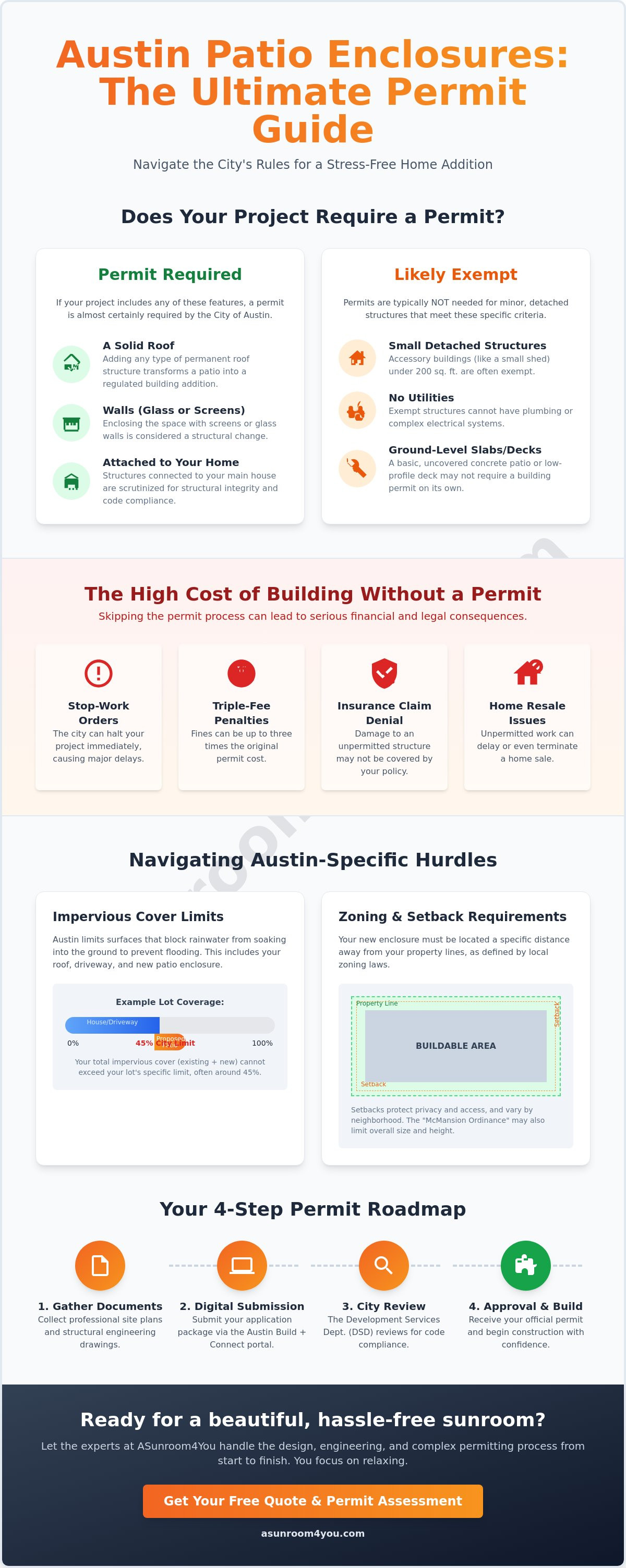
Many homeowners assume that because they already have a back patio, adding a roof or walls is a minor cosmetic change. In the City of Austin, the rule of thumb is quite clear: if the structure has a roof or walls, you almost certainly need a permit. While a basic ground-level concrete slab might be exempt from certain building requirements, the moment you begin to enclose that space, it transitions into a permanent improvement. The Austin Development Services Department (DSD) oversees these regulations to ensure every addition meets the 2021 International Residential Code (IRC) and local amendments. In 2026, the DSD has streamlined its fee structures by dissolving the old technology surcharge, but the enforcement of safety standards remains as rigorous as ever.
The Definition of a Permanent Structure
Austin's building codes distinguish between temporary fixes and permanent additions. Whether you're installing screen rooms to keep out pests or glass-enclosed sunrooms for year-round comfort, the city views these as structural changes. Attached structures are scrutinized more heavily than freestanding ones because they impact the structural integrity of your existing home. The city's "Work Exempt from Permits" list is surprisingly short. It generally covers minor repairs or small, detached accessory structures under 200 square feet with no plumbing. Patio enclosures, however, fall outside these exemptions. They are tied to municipal Zoning laws that dictate how much of your lot can be covered by buildings. Austin is often stricter than neighboring cities like Round Rock, specifically regarding how these structures affect your property's footprint.
Consequences of Building Without a Permit
Skipping the patio enclosure permit Austin process might save time today, but it creates massive headaches later. If a neighbor reports your construction or a city inspector notices the work, you could face an immediate stop-work order. In 2026, the city can impose triple-fee penalties for work started without approval. Beyond the immediate fines, you face long-term risks that affect your peace of mind and your wallet:
Insurance issues: If a severe Central Texas storm damages an unpermitted enclosure, your homeowner's insurance provider may deny the claim entirely.
Resale delays: When you sell your home, the buyer's inspector will check for permits. Unpermitted work can stall a sale or force you to pay for retroactive permitting, which is often more expensive and stressful.
Structural safety: Permits ensure your enclosure is engineered to handle local wind loads and soil conditions, protecting your family and your investment.
We've seen many homeowners struggle with these issues after the fact. It's always better to handle the red tape correctly from the start. Taking the time to secure the proper documentation ensures your new retreat is a legal, safe, and valuable part of your home.
Austin-Specific Hurdles: Impervious Cover and Zoning
While structural safety is vital, Austin's permitting process is heavily influenced by environmental stewardship. Securing a patio enclosure permit Austin requires you to look beyond the blueprints and consider the land itself. Two of the biggest hurdles you'll face are impervious cover limits and the city's strict tree protection ordinances. Austin's rules are unique because they prioritize the local ecosystem as much as the structure you intend to build.
Impervious cover refers to any surface that prevents rainwater from soaking into the ground. This includes your home's roof, driveways, and any concrete patios. Austin limits the percentage of your lot that can be covered by these surfaces to manage drainage and prevent flooding. If your backyard is already occupied by a pool or a large driveway, your enclosure might need to be smaller than you originally planned. Zoning regulations also include setback requirements, which dictate how far your structure must be from your property lines. Additionally, the McAnansion Ordinance limits the overall height and bulk of residential additions to maintain the character of local neighborhoods.
Calculating Your Impervious Cover Limit
Understanding what counts toward your limit is essential. While solid roofs and concrete slabs are 100% impervious, some wood decks with specific spacing may be considered pervious. You can find your lot’s specific percentage limit through the city’s land use records. If you're nearing your limit, consider using pervious pavers or adjusting the footprint of your design. If you're unsure how these limits affect your project, consulting with a local professional can save you hours of research and potential design errors.
Tree Protection and Critical Root Zones
Austin is famous for its canopy, and the city works hard to protect it. Any tree with a diameter of 19 inches or greater is considered protected. If your proposed enclosure sits within the "Critical Root Zone" of such a tree, you'll face additional layers of scrutiny. This zone isn't just about the trunk; it extends to the edge of the leafy canopy. Construction activity, such as digging footings or even parking heavy equipment, can damage roots and lead to permit denials. These rules align with the International Residential Code (IRC) guidelines for safe construction near natural obstacles. Working with a certified arborist during the design phase is often the best way to ensure your project moves forward without harming Austin’s natural beauty.
Professional vs. DIY Permitting: Addressing the Hassle
Many Austin residents hope to speed through the process using the city’s "Express Permit" option. Unfortunately, this path rarely applies to custom patio enclosures. Because these structures change the home's footprint or involve complex rooflines, they require a full residential review. Attempting a DIY application for a patio enclosure permit Austin often leads to months of back-and-forth with the Development Services Department. While the review process for small projects typically takes 5 to 10 business days, an incomplete application can push that timeline significantly longer.
The technical requirements are more demanding than most homeowners expect. You'll need professional site plans, detailed elevations, and structural engineering drawings. If you miss a single detail regarding your property’s impervious cover or setback lines, your application might be rejected. Professional builders handle these details daily. They ensure your project meets the 2026 energy codes, which prioritize insulation and high-performance glazing. This isn't just about passing inspection; it's about making sure your glass-enclosed sunroom stays comfortable during a scorching Texas July without sending your energy bills soaring.
The Complexity of Structural Engineering
Central Texas weather is unpredictable, and your enclosure must be built to last. The city follows the 2021 International Residential Code (IRC), which includes specific wind load requirements for our region. You can't simply assume your existing concrete slab is enough. A solid roof sunroom or a glass roof sunroom adds significant weight that an old patio slab might not be designed to support. A sealed drawing from a licensed engineer is often the only way to prove your foundation is safe. These engineering reports are a standard part of a professional build and provide the peace of mind that your family is protected during a storm.
Homeowners Association (HOA) Coordination
It’s a common mistake to think that a city permit gives you the green light to start building. In many Austin neighborhoods, your HOA has the final say on the aesthetic details. They often have strict rules about roofing materials, frame colors, and even the type of mesh used in screen rooms. We recommend preparing a professional packet for your board that includes high-quality renderings. Showing them exactly how the design complements your home's existing architecture makes it much easier to get a "yes" on the first try. This proactive approach prevents the frustration of mid-project changes that can happen if the board objects to your materials later.
Step-by-Step: Applying for Your Austin Permit
Once you've finalized your design and confirmed your lot's impervious cover limits, it's time to engage with the City of Austin's digital filing system. Securing a patio enclosure permit Austin is a multi-stage process that requires attention to detail and patience. You'll start by creating an account on the Austin Build + Connect (AB+C) portal. This is the central hub where you'll upload documents, pay fees, and track the progress of your application. Before you hit submit, use the city's "Interactive Tool" to verify that your property actually falls within the city's full-purpose jurisdiction. Some Austin mailing addresses are actually in the extra-territorial jurisdiction (ETJ), which follows different rules.
The application itself requires a specific set of documents to move past the initial screening. You'll need a recent survey of your property, a detailed site plan showing all existing and proposed structures, and professional construction drawings. For most patio enclosures, the city requires a Residential Building Permit application. In 2026, you can expect an initial Residential Plan Review Application Processing Fee of $136.45, followed by a Small Projects Plan Review fee of $229.90. After submission, your project enters the review loop. You'll need to monitor the portal for "Master Comments," which are the formal corrections or questions from city plan reviewers. Responding to these promptly is the only way to keep your project moving toward approval.
Using the AB+C Portal Effectively
The AB+C portal is a powerful tool, but it can be frustrating if you don't know what to look for. It allows you to track your application status in real-time, but many homeowners get stuck at the "Incomplete Information" stage. This usually happens when a site plan is missing a scale or the impervious cover calculations aren't clearly labeled. If you'd rather skip the digital headache and ensure your paperwork is perfect from day one, let our experienced team handle the filing for you.
The Inspection Phase
Approval of the permit is just the beginning. Construction is monitored through three critical inspection phases to ensure everything matches the approved plans. First is the foundation inspection, where the city verifies your slab or footings are structural. Next is the framing and electrical inspection. If you're adding lighting or outlets to your screen rooms, a licensed electrician must pull a separate permit and be present for this check. Finally, the city conducts a final inspection to close out the permit. What do inspectors look for? They focus on structural connections, proper weatherproofing, and adherence to the 2021 IRC safety standards. If you fail an inspection, don't panic. You'll receive a list of required corrections, and once those are fixed, you can schedule a re-inspection to get back on track.
Why ASunroom4You is Austin’s Choice for Stress-Free Enclosures
Building a new outdoor space should be an exciting transformation for your home, not a source of legal anxiety. At ASunroom4You, we've spent over 35 years navigating the specific requirements of Texas building departments. We understand that the technical details of a patio enclosure permit Austin can feel like a full-time job for a homeowner. That's why we offer a completely turnkey approach to every project we undertake. Our experienced team handles the complexities of securing a patio enclosure permit Austin on your behalf, managing the design, the engineering, and the full permitting process from start to finish.
We specialize in creating custom Patio Enclosures, Screen Rooms, and Solid Roof Sunrooms that respect Austin's unique environmental and zoning laws. Our designs aren't just beautiful; they're engineered to comply with the strict impervious cover limits and setback requirements discussed earlier in this guide. We use maintenance-free materials specifically chosen for the Central Texas climate. These high-performance components withstand the intense heat and humidity of our region, ensuring your investment looks and functions perfectly for decades. We want you to feel right at home and completely at ease within your new residential retreat.
Our Local Expertise in Austin and San Antonio
Our deep roots in Central Texas give us a distinct advantage when it comes to local code compliance. We design every project for maximum enjoyment while staying strictly within the city's legal framework. Working with a builder who knows the local inspectors and understands their specific expectations can significantly reduce the time your project spends in the review phase. We've built a reputation for reliability and trust by delivering affordable, high-quality outdoor transformations that pass inspection the first time. Whether you're looking for a Glass Roof Sunroom or a simple patio cover, our goal is to provide a seamless extension of your living space that adds real value to your property.
Start Your Project with Confidence
Every successful project begins with a clear understanding of your property's potential. We offer a free in-home survey to assess your lot's specific limits, including a detailed look at your impervious cover and any potential tree protection issues. This initial step allows us to design an enclosure that integrates naturally with your existing home architecture and matches your budget. We don't believe in one-size-fits-all solutions; we believe in personalized retreats that solve your specific frustrations with the weather and pests. You deserve a space where you can relax and recharge without worrying about the red tape. Schedule your free Austin patio enclosure consultation today! and let us turn your backyard vision into a stress-free reality.
Build Your Austin Retreat with Confidence
Securing a patio enclosure permit Austin doesn't have to be a barrier between you and the home of your dreams. By understanding the city's strict impervious cover limits and navigating the digital AB+C portal correctly, you can avoid the stress of unexpected fines or stop-work orders. Local zoning and heritage tree protections are just as vital as the structural blueprints themselves. While the process is rigorous, the reward of a comfortable, year-round retreat is well worth the effort.
You don't have to handle the technical red tape alone. As licensed and insured professional builders with over 35 years of Texas experience and an A+ BBB rating, we specialize in making the process seamless. Get Your Free In-Home Survey and Permit Evaluation today. We'll assess your lot's potential and ensure your project meets every 2026 city code from the very first day. It's time to stop worrying about paperwork and start looking forward to your new favorite room in the house. We look forward to helping you transform your outdoor space into a sanctuary of relaxation.
Frequently Asked Questions
Do I need a permit for a screen room in Austin?
Yes, you need a permit for a screen room in Austin. Any structure attached to your home that includes a roof or walls must comply with local building codes. This requirement ensures that your new space is structurally sound and can withstand Central Texas weather conditions. City officials require these permits to verify that your project doesn't negatively impact drainage or neighborhood safety standards.
How much does a patio enclosure permit cost in Austin?
The cost of a patio enclosure permit Austin depends on the project's scope and value. For FY2026, the city has proposed a $136.45 processing fee and a $229.90 plan review fee for small projects. A building permit for a patio or deck is estimated at $626.46 based on current Development Services Department data. These fees help cover the cost of technical reviews and site inspections throughout the build.
How long does it take to get a building permit in Austin in 2026?
For small projects like patio covers, the city's review process typically takes between 5 and 10 business days. If your enclosure is classified as a full residential addition, the timeline extends to 10 to 20 business days. These estimates assume your application is complete and doesn't require major corrections. Using the Austin Build + Connect (AB+C) portal allows you to track your application status in real-time.
What is the "Impervious Cover" limit for residential lots in Austin?
Impervious cover limits restrict the percentage of your lot that can be covered by surfaces that don't absorb water. This includes your home’s roof, concrete patios, and driveways. Austin has strict environmental goals, so your enclosure's footprint must stay within these limits. If you're close to your limit, you may need to adjust your design or use pervious materials to remain compliant with local zoning laws.
Can I build a patio cover without a permit if it is not attached to the house?
You might be exempt from a permit if the structure is detached, under 200 square feet, and less than 15 feet tall. It also cannot have any plumbing. However, most homeowners prefer their enclosures to be attached to the house for easy access and better weather protection. Any structure that is attached to your primary dwelling requires a building permit regardless of its specific size or height.
What happens if I build a patio enclosure without an Austin city permit?
Building without a patio enclosure permit Austin can result in immediate stop-work orders and significant fines, including triple-fee penalties. The city may even require you to remove the structure if it doesn't meet safety codes. Beyond legal trouble, unpermitted work often causes insurance companies to deny claims and makes it extremely difficult to sell your property. It’s always safer to secure approval before construction begins.
Do I need a separate electrical permit for my patio enclosure?
Yes, adding electrical features like ceiling fans, lighting, or outlets requires a separate electrical permit. This work must be performed by a licensed electrician who is responsible for pulling the permit. Residential electrical permit fees usually range between $25 and $75. This step is vital for fire safety and ensures your enclosure meets the latest electrical standards for outdoor use in Central Texas.
Will my patio enclosure increase my property taxes in Travis County?
Your property taxes will likely increase because a permanent enclosure adds square footage and value to your home. The Travis Central Appraisal District evaluates improvements to determine your property's market value. Since an enclosure enhances your home's functionality and aesthetic appeal, it contributes to a higher appraisal. This reflects the long-term investment you are making in your property’s quality and your family's lifestyle benefits.


Comments