
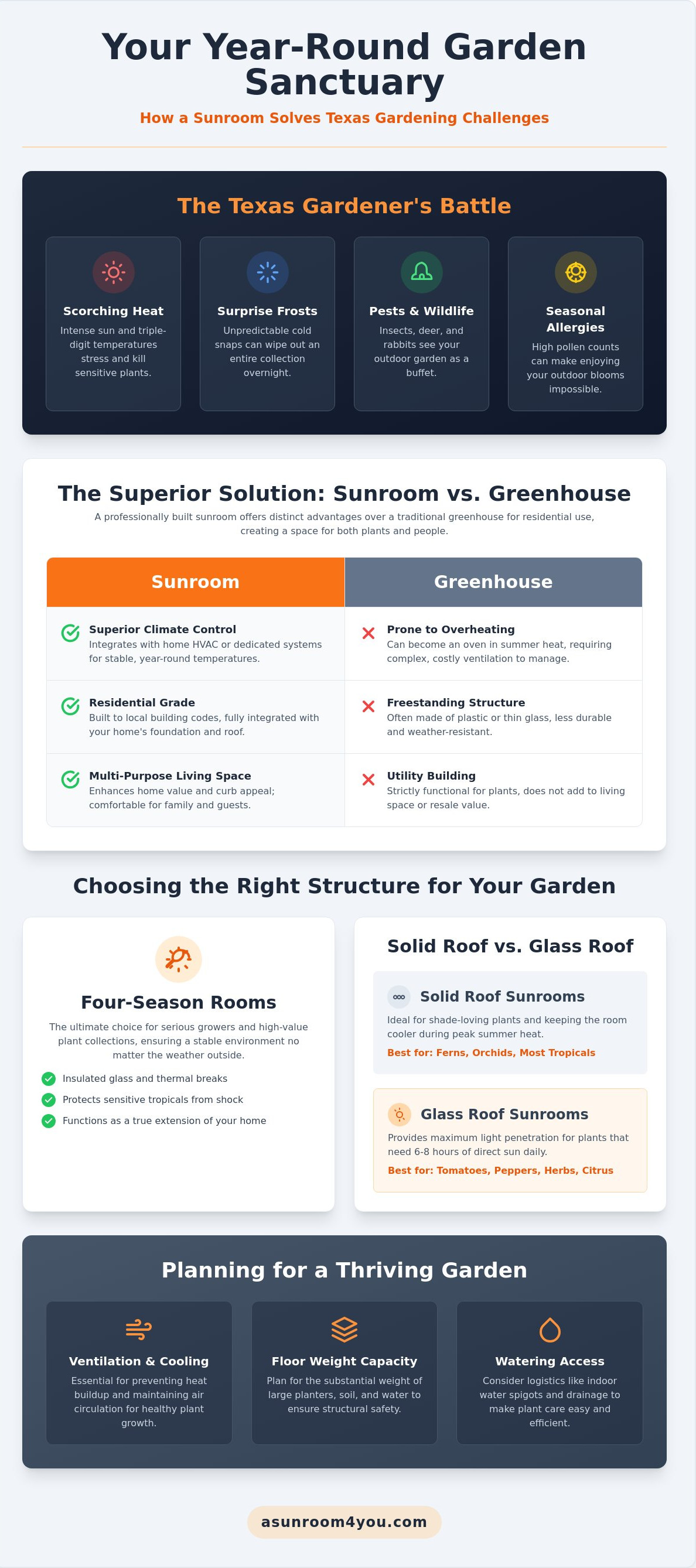
Sunroom for Indoor Gardening: The Complete 2026 Guide to Year-Round Growth

What if your gardening season didn't have to end when the Texas heat hits triple digits or a surprise frost rolls through? For many homeowners, the dream of a lush backyard oasis often turns into a constant battle against scorching sun, invasive insects, and unpredictable humidity. You've likely felt the sting of losing a prized plant to the elements despite your best efforts. It's frustrating when the environment works against your green thumb rather than with it.
A professionally designed sunroom for indoor gardening changes the rules of the game by creating a perfectly balanced ecosystem right inside your home. In this 2026 guide, you'll learn how to build a high-performance space that offers a year-round harvest of vegetables and vibrant blooms. We will walk through the essential elements of biophilic design and the latest smart climate systems that make consistent growth possible in our unique regional climate. From choosing architectural statement plants to mastering humidity control, you're about to discover how to turn a simple room addition into a thriving, value-adding sanctuary for your family and your flora.
Table of Contents
What is a Sunroom for Indoor Gardening?
A sunroom for indoor gardening is a specialized, climate-controlled residential addition built to provide the perfect balance of light and temperature. It isn't just a porch with windows; it's a high-performance ecosystem designed to sustain life. These spaces serve a dual purpose by acting as both a thriving habitat for houseplants and a comfortable retreat for you and your family. At ASunroom4You, we have spent over 35 years helping Texas homeowners bridge the gap between their living rooms and their landscapes. We focus on creating custom spaces that feel like a natural extension of your home rather than an afterthought.
Sunroom vs. Greenhouse: Key Differences
Many people assume a greenhouse is the only way to grow plants year-round, but a sunroom offers several distinct advantages for the modern homeowner. First, the structural integrity is significantly higher. Sunrooms are built to meet local residential building codes and are fully integrated with your home's foundation and roofline. This makes them much more durable than a freestanding plastic or glass structure. Second, climate control is far superior. While a greenhouse can become an oven in the afternoon, a sunroom can be tied into your home's HVAC system or fitted with dedicated cooling. Finally, a professional patio enclosure or glass-roofed room enhances your home's curb appeal and resale value. It looks like a beautiful part of your home, not a utility building in the backyard. You get a space that is as comfortable for guests as it is for your greenery.
Why Texas Gardeners Need Indoor Solutions
Gardening in Texas often feels like a battle against the elements. Whether you are dealing with a surprise frost in San Antonio or a record-breaking heatwave in Austin, the weather is rarely predictable. A sunroom for indoor gardening provides a stable environment where sensitive tropicals and vegetables can flourish without the stress of extreme temperature swings. It also solves the persistent "Texas pest" problem. By moving your garden inside, you eliminate the threat of whiteflies, aphids, and larger wildlife like deer or rabbits that view your garden as a buffet. For those with seasonal allergies, an enclosed garden offers a pollen-free sanctuary. You can enjoy the beauty of your blooms without the discomfort of cedar fever or high grass counts. It is a practical remedy for the frustrations of traditional outdoor planting.
Choosing the Right Structure for Your Indoor Garden
Choosing the right structure is the first step toward a successful indoor garden. You need to decide how much control you want over the environment. A three-season room might work for hardy local plants, but it often struggles during the peak of a Texas summer or a sudden winter freeze. For most serious growers, a sunroom for indoor gardening is the superior choice when built as a four-season addition. This configuration functions as a true extension of your home's climate-controlled footprint, providing the stability your plants need to thrive. Whether you prefer the sleek look of Glass Roof Sunrooms or the insulated comfort of Solid Roof Sunrooms, a custom design ensures the addition matches your home's existing architecture perfectly.
Four-Season Rooms for Year-Round Tropicals
Tropical plants are incredibly sensitive to temperature swings. If the mercury drops too fast during a North Texas cold snap, you risk losing your entire collection to plant shock. Four-season rooms utilize insulated glass and thermal breaks in the framing to keep the internal temperature steady. By integrating the space with your home’s HVAC system, you ensure that your rare monsteras or fiddle leaf figs stay cozy regardless of the weather outside. This level of control makes these rooms the best long-term investment for high-value plant collections. If you are just starting out, these Five Tips for Indoor Gardening can help you understand the basic needs of your plants before you begin your build.
Solid Roof vs. Glass Roof Options
The type of roof you choose depends on what you plan to grow. Solid Roof Sunrooms provide excellent insulation and are perfect for shade-loving tropicals that thrive in indirect light. They also help keep the room significantly cooler during the brutal July heat. On the other hand, Glass Roof Sunrooms offer maximum light penetration. This is the ideal environment for growing vegetables like tomatoes or peppers that require six to eight hours of direct sun. If you aren't sure which style fits your backyard and your hobby, you can explore our custom design options to see what works best for your specific property.
Glass Technology: UV Protection and Light Spectrum
Modern glass has come a long way from the simple panes found in older greenhouses. We use Low-E (low-emissivity) glass to reflect infrared heat while allowing the specific spectrum of light needed for photosynthesis to pass through. This prevents the "leaf scorch" often seen in poorly designed enclosures. High-performance coatings ensure your plants get the energy they need without the room becoming an oven. UV-resistant glass serves as the primary defense against plant dehydration by blocking the most intense rays of the sun. This technology allows you to enjoy a lush, green view without the high energy bills often associated with large glass additions.
Engineering the Perfect Climate for Growth
"Will my sunroom become a sauna during the Texas summer?" This is the most common concern we hear from homeowners in San Antonio and Austin. It's a valid worry; a poorly designed glass room can trap heat and bake your plants in hours. However, a properly engineered sunroom for indoor gardening functions as a smart ecosystem. By balancing passive and active ventilation, you can maintain a comfortable temperature for both your family and your flora even when it's 105 degrees outside. Passive ventilation involves strategically placed windows and doors that allow natural breezes to flow through the space. Active ventilation uses exhaust fans or your home’s central HVAC system to move air when the wind dies down.
Humidity management is the next piece of the puzzle. Tropical plants thrive in high humidity, while arid succulents prefer a drier environment. If you're mixing species, you'll need to create microclimates within the room. Ceiling fans are essential for this because they prevent "dead air" spots where moisture can build up. Consistent air circulation mimics the natural outdoor environment, which strengthens plant stems and prevents the stagnant conditions that lead to root rot. You can find more detailed advice on creating these environments in this guide to Indoor Gardens from the University of Florida.
Managing the Texas Heat in San Antonio and Austin
The orientation of your sunroom dictates how much heat you'll have to manage. A north-facing sunroom receives consistent, indirect light that is perfect for low-light tropicals. South-facing rooms get the most intense sun, which is great for vegetables but requires more cooling power. We often recommend high-performance Patio Enclosures with integrated shades or external Patio Covers to block the mid-day sun. These features act as a thermal shield, regulating temperature spikes before they can stress your garden. By blocking the worst of the Texas humidity, you create a space that feels crisp and refreshing throughout the year.
Humidity and Airflow: Avoiding Mold and Pests
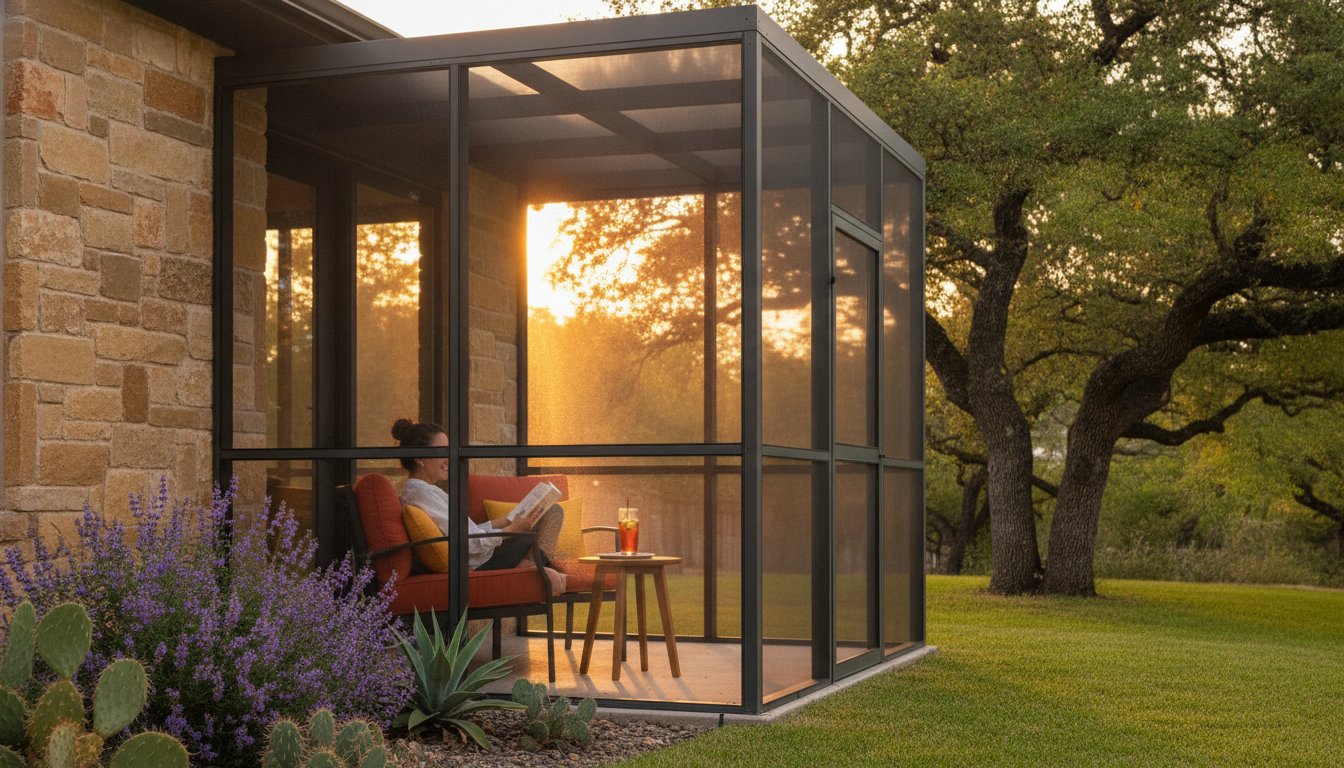
Stagnant air is the primary enemy of any indoor garden. Without movement, moisture settles on leaves, creating a breeding ground for powdery mildew and mold. Integrating Screen Rooms or screened windows into your design allows for natural cross-ventilation during the milder spring and fall months. In 2026, many serious gardeners are also using smart sensors to monitor their sunroom's ecosystem in real-time. These devices can alert your phone if the humidity drops too low or if the temperature rises above your set threshold. This technology takes the guesswork out of gardening, ensuring your sanctuary remains a healthy habitat rather than a maintenance burden.
Designing Your Sunroom Garden Layout
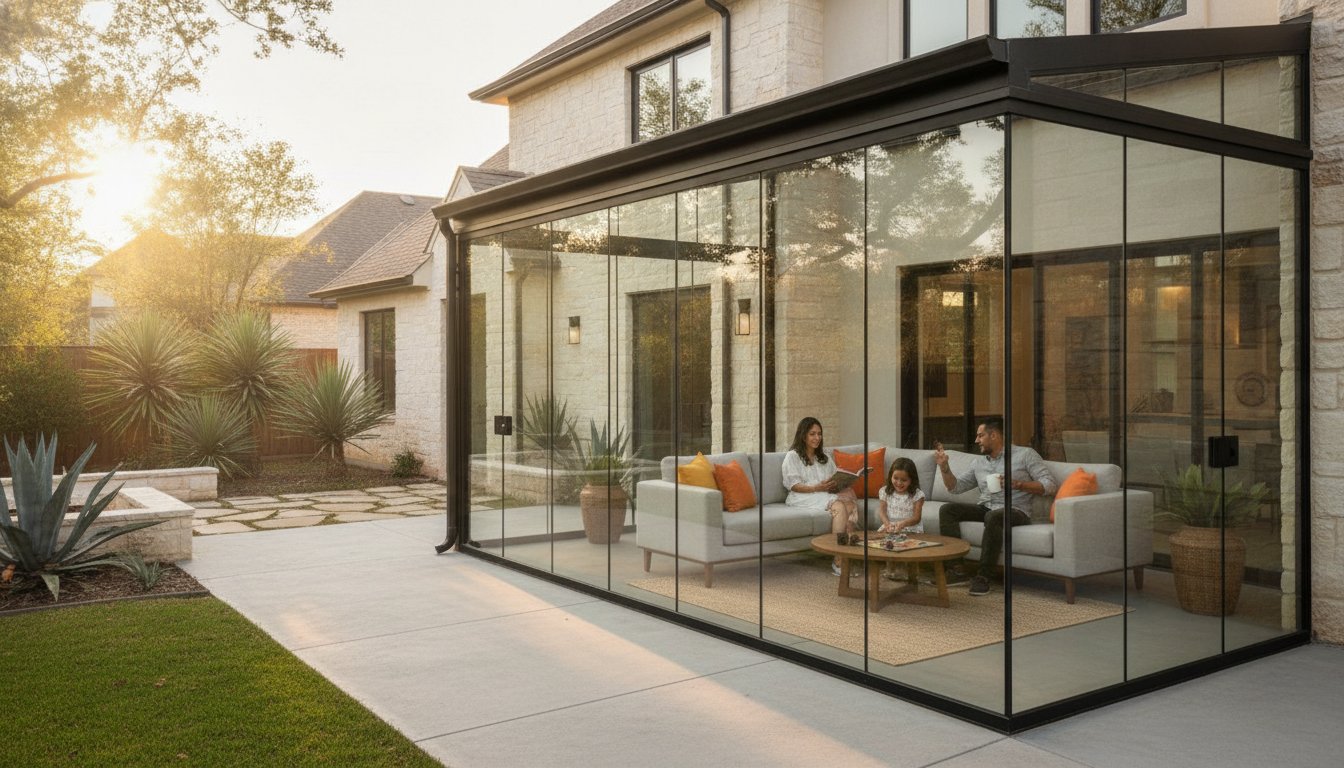
Designing a sunroom for indoor gardening requires thinking beyond just where to put the furniture. You have to account for the physical weight of your hobby. A large ceramic pot filled with damp soil can easily weigh over 100 pounds. If you plan on a dense collection of architectural statement plants, your floor needs to be engineered for that load from the start. Beyond weight, you need to consider how you'll get water to your plants and power to your equipment. Integrating a hose bib or a hidden automatic drip system during the build phase saves you from hauling heavy watering cans across your house every morning.
Electrical needs are just as important for a high-performance garden. If you're growing vegetables that need supplemental light during cloudy winter days, you'll want outlets positioned near your plant stands. Hydroponic systems also require reliable power for pumps and timers. By planning these logistics early, you avoid the mess of extension cords running through your beautiful retreat. If you're ready to start mapping out your space, get a free quote for your custom sunroom design to ensure your layout is as functional as it is beautiful.
Vertical Gardening and Space Optimization
Utilizing wall space is a game changer for smaller patio enclosures. Hanging planters and tiered shelving units allow you to maximize light exposure for plants at every height. A "living wall" can serve as a stunning natural focal point, turning a plain interior wall into a lush tapestry of greenery. This approach keeps your floor space clear for walking and relaxation while surrounding you with nature. It's a practical way to grow more without making the room feel cluttered or cramped.
Flooring and Drainage: Practical Construction Tips
When it comes to materials, tile or treated concrete are superior choices compared to wood or laminate. These surfaces don't warp, rot, or harbor mold when exposed to the moisture inherent in a garden environment. For large-scale watering, we often recommend slightly sloped floors and discreet floor drains to make cleanup effortless. Water-resistant flooring is non-negotiable for sunroom gardening because it protects your home's structure from the constant exposure to spills and high humidity. These practical construction choices ensure your garden remains a source of joy rather than a source of home maintenance stress.
Build Your Garden Oasis with ASunroom4You
At ASunroom4You, we don't just build additions; we create custom retreats tailored to your specific lifestyle. If you are serious about your plants, you need a partner who understands the structural demands of a sunroom for indoor gardening. With over 35 years of local experience in San Antonio and Austin, we have seen every environmental challenge Texas can throw at a homeowner. Our team knows how to design a space that handles the humidity and weight of a lush indoor garden while remaining a comfortable, beautiful part of your home. We take pride in being a neighborly expert that you can trust for long-term reliability.
We stand by a "maintenance-free" promise. Our high-performance materials are designed to resist the wear and tear of a damp, plant-filled environment. You should spend your weekends pruning your prize-winning orchids or harvesting fresh vegetables, not scraping paint or fixing leaks. Our process is streamlined to be as stress-free as possible. It begins with your vision and ends with a durable, beautiful structure that matches your home perfectly. We handle the permits and the technical engineering, ensuring your new room meets all local safety codes. This turn-key approach is why we have successfully completed thousands of projects across South and Central Texas over the decades.
Affordable Solutions for Every Green Thumb
We believe every gardener deserves a sanctuary, regardless of their budget. Our options range from simple Screen Rooms for seasonal enjoyment to fully insulated Glass Roof Sunrooms for total climate control. If you're looking for a balance between light and shade, our Solid Roof Sunrooms provide a practical remedy for the intense Texas sun. A professionally installed sunroom is also a smart financial move. In the competitive Texas real estate market, these additions significantly increase your property value by adding usable, year-round square footage. We work with you to find a functional solution that fits your financial requirements without compromising on quality.
Get Started with Your Free In-Home Survey
The journey to your new garden starts with a professional design consultation. During our in-home survey, we assess your site for optimal sun exposure and determine how to best integrate the structure with your home's existing architecture. We look at drainage, electrical access, and structural support to ensure your new sunroom for indoor gardening is ready for growth from day one. We take the time to answer your questions and address any concerns about the Texas climate. Schedule your free design survey with ASunroom4You today! and let's start planning the year-round garden of your dreams.
Start Your Year-Round Garden Journey Today
We have explored how the right structure and modern climate technology can turn a simple home addition into a thriving sanctuary. You now understand that a successful garden depends on smart layout planning and high-performance materials. Investing in a sunroom for indoor gardening is about more than just plants; it's about reclaiming your time and enjoying your home every single day regardless of the weather. ASunroom4You brings over 35 years of local Texas experience to every project. We use maintenance-free materials and construction techniques to ensure your space remains a retreat rather than a chore. As A+ rated professional sunroom builders, we're ready to help you solve the environmental challenges of our region once and for all.
Your dream of a lush, indoor oasis is closer than you think. We look forward to helping you grow something beautiful in a space you will love for decades to come.
Frequently Asked Questions
Is a sunroom or a greenhouse better for indoor gardening?
A sunroom is often the superior choice because it integrates directly with your home's living space and climate control systems. Unlike a standalone greenhouse, a sunroom provides a comfortable environment for both people and plants. You can use it as a dining area or home office while your tropicals flourish. It offers better insulation and higher structural integrity than most residential greenhouses.
Can I grow vegetables like tomatoes in a sunroom in Texas?
Yes, you can absolutely grow tomatoes and other sun-loving vegetables year-round in a properly designed sunroom for indoor gardening. You'll need to choose a glass-roofed option to ensure your plants get the six to eight hours of direct light they require. With consistent temperature control, you won't have to worry about the summer heat or winter frosts that typically end the Texas growing season.
How do I keep my sunroom from getting too hot in San Antonio summers?
We use high-performance Low-E glass and strategic ventilation to prevent the "sauna effect" common in older glass rooms. Adding a patio cover or integrated shades can also block the most intense mid-day rays. Ceiling fans and active air circulation keep the space breezy and comfortable even during a July heatwave. These features protect your plants from scorching while keeping your energy bills manageable.
Do I need special glass for my sunroom if I want to grow plants?
High-performance glass is essential for a thriving sunroom for indoor gardening in our regional climate. Low-E coatings are the gold standard because they reflect heat while allowing the specific light spectrum needed for photosynthesis to pass through. This technology prevents leaf scorch and keeps the room at a stable temperature. It acts as a primary defense against plant dehydration and UV damage.
Will a sunroom garden attract bugs into my house?
A professionally built sunroom actually provides a powerful barrier against the whiteflies, aphids, and mosquitoes that plague outdoor gardens. Because the space is fully enclosed and integrated with your home, you have total control over the environment. You won't have to deal with the "Texas pest" problem or larger wildlife like deer eating your harvest. It creates a clean, controlled sanctuary for your greenery.
Can I use my existing patio for an indoor garden enclosure?
We can often convert your existing concrete slab into a beautiful patio enclosure or sunroom if the foundation is structurally sound. Our team will assess your current patio during a free in-home survey to determine the best way to integrate the new walls and roof. This is a cost-effective way to gain a year-round gardening space without starting from scratch. We ensure the new structure matches your home's architecture perfectly.
What kind of maintenance does a gardening sunroom require?
Our sunrooms are built with maintenance-free materials like high-quality aluminum and vinyl that won't rot, rust, or require painting. Your primary task will be keeping the glass clean and managing your plants' needs. Because these structures are designed for high-humidity environments, they handle water spills and moisture much better than standard home additions. You get to spend your time gardening rather than fixing the room.
Do I need a permit to build a gardening sunroom in Austin, TX?
Yes, a building permit is required for any permanent sunroom addition in Austin to ensure it meets local safety and energy codes. ASunroom4You handles the entire permitting process for you, from the initial application to the final inspection. This takes the stress out of your project and ensures your new garden oasis is fully compliant with all regional regulations. We've been navigating these local requirements for over 35 years.
Comments