
Sunroom vs. Patio Cover: Which Outdoor Living Space Is Right for You?

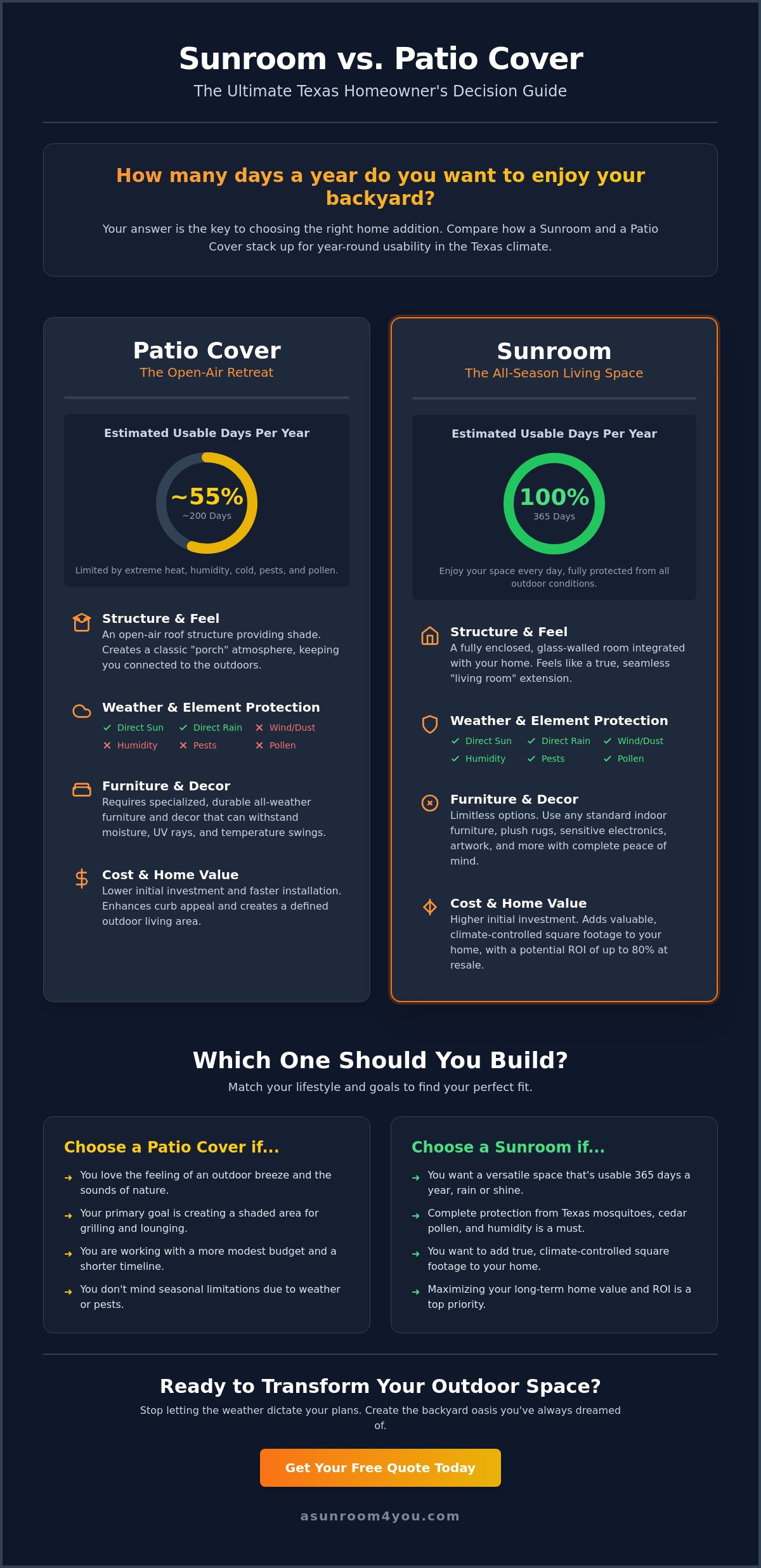
How many days this year did you skip sitting outside because the Texas humidity felt like a heavy blanket or the mosquitoes were out for blood? It's a common frustration for homeowners who love their backyards but hate the local climate's harsh reality. When you're looking to upgrade your home, the debate of sunroom vs patio cover usually comes down to one simple question: how many days a year do you actually want to use your backyard? It's a significant investment, and you want to make sure your choice provides the comfort you've been missing.
We understand that your home is your sanctuary; you shouldn't have to retreat indoors just because the temperature rises or the cedar pollen count spikes. You'll discover the key differences in comfort, maintenance, and long-term home value to help you choose the perfect addition for your lifestyle. We'll explore everything from local permit requirements to how these structures can offer a return on investment of up to 80 percent at resale. This guide provides the clarity you need to transform your outdoor space into a functional retreat that serves your family for years to come.
Table of Contents
What Is the Difference Between a Sunroom and a Patio Cover?
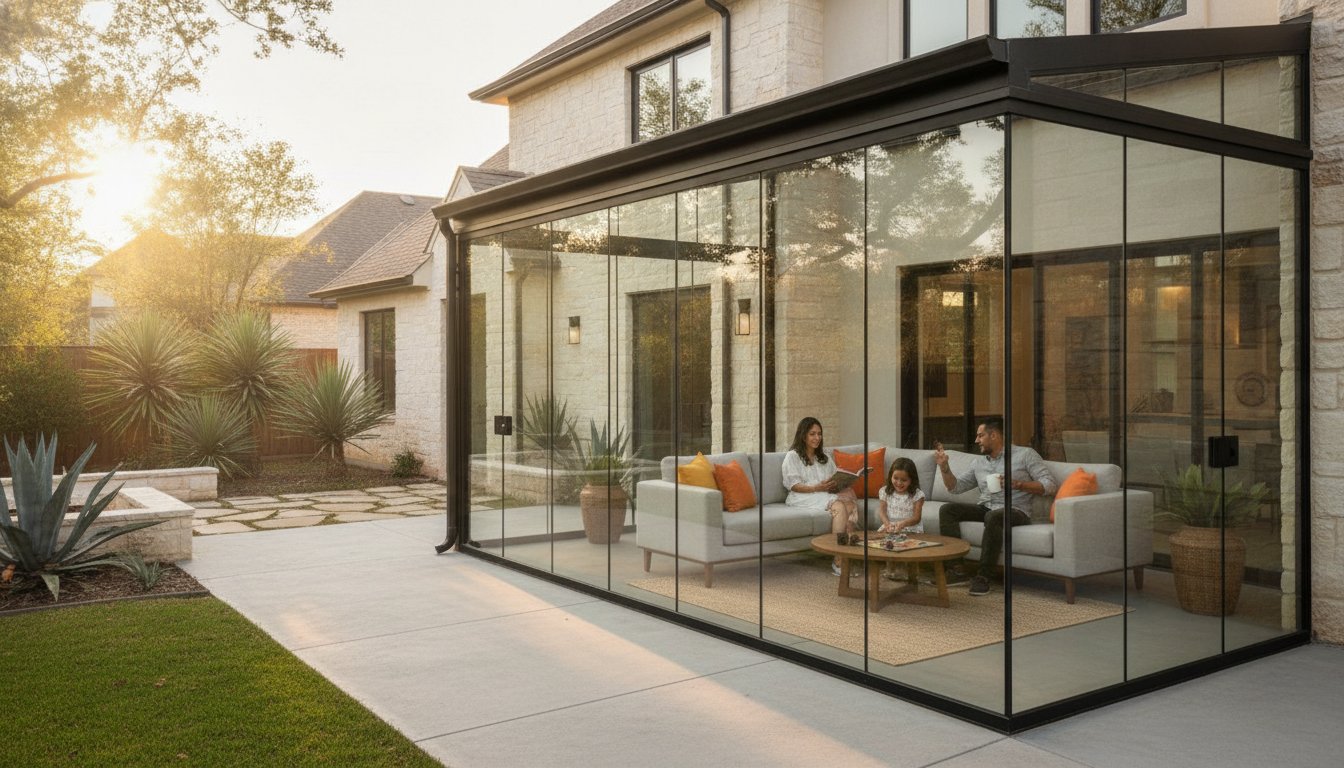
Deciding between a sunroom vs patio cover starts with understanding how you plan to spend your Saturday afternoons. While both additions offer relief from the elements, they provide fundamentally different experiences. A patio cover is an open-air structure that provides a permanent "ceiling" for your outdoor life. It's an outdoor shelter designed to keep the sun off your back and the rain off your furniture. Conversely, a sunroom is a fully enclosed, glass-walled room that's physically integrated into your home's footprint. It's a true living space where you can sit in your pajamas, drink coffee, and watch the birds without ever feeling a mosquito bite.
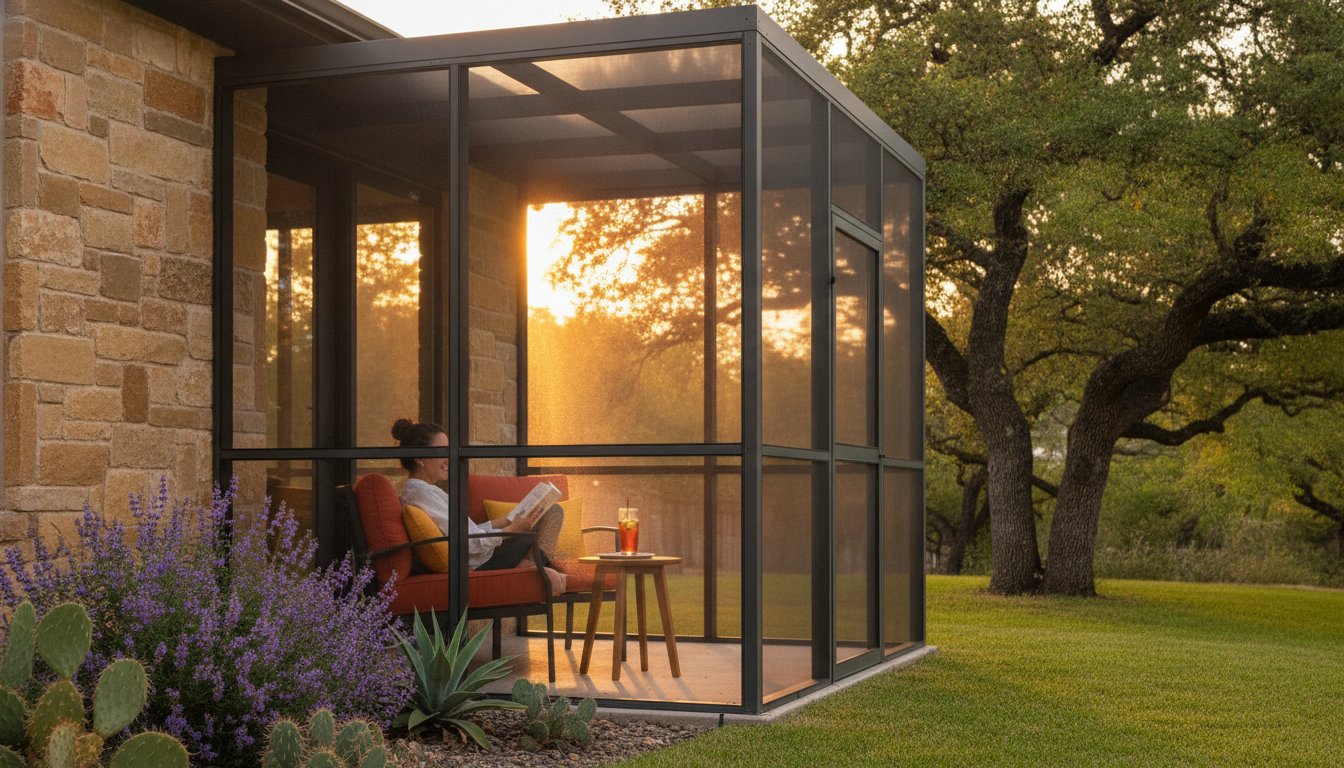
The difference lies in the level of separation from the environment. A patio cover keeps you outdoors but shaded. A sunroom brings the outdoors inside. For those who want something in between, screen rooms offer a hybrid solution. They provide the structural feel of an enclosure and excellent pest protection, but they rely on mesh screens rather than glass. This means they don't offer climate control, but they do allow for maximum airflow. Choosing the right one depends on whether you want a breezy porch or a temperature-controlled retreat.
The Anatomy of a Patio Cover
A patio cover is built using heavy-duty posts and beams that support a solid roofing system. These structures are typically attached to your home's existing roofline or fascia, though they can also be freestanding. The primary goal is to block direct UV rays and create a dry, usable area for grilling or lounging. Many homeowners appreciate the simplicity of this design. It requires fewer permits than a full room addition and installs quickly. It's an excellent choice if you love the Texas breeze but need a break from the direct glare of the sun.
The Anatomy of a Sunroom
Sunrooms are much more sophisticated structures. They feature advanced wall systems made of high-performance glass and insulated roofs designed to mirror your home's existing architecture. The goal is to create a seamless transition that feels like a natural part of your floor plan. You'll typically choose between two main types. Three-season rooms are great for spring, fall, and mild winter days. However, four-season rooms are engineered with thermal breaks and insulated glass to handle the most extreme heat. These all-weather spaces allow you to enjoy a panoramic view of your backyard while staying perfectly cool in the middle of July.
Comparing Functionality: Protection, Comfort, and Versatility
The functional difference between these two structures is significant. When you're evaluating a sunroom vs patio cover, you're really deciding how much of the Texas environment you want to let in. A patio cover is a beautiful, budget-friendly way to get more use out of your deck or concrete slab. It provides a "porch" feel where you remain connected to the sights and sounds of the neighborhood. However, it won't stop a sideways rainstorm from soaking your rug, and it certainly won't keep the humidity at bay on a stagnant July afternoon.
Sunrooms take a different approach. They provide a "living room" feel that effectively extends your home's square footage. Because they're fully enclosed, you have total control over the climate. You can watch a thunderstorm from the comfort of a temperature-controlled space without worrying about wind gusts or dampness. This makes the sunroom a far more versatile option for families who want a space that's usable 365 days a year, regardless of the weather report.
Pest and Allergen Control
In regions like San Antonio and Austin, mosquitoes and cedar pollen can make outdoor living miserable for months at a time. A patio cover offers no protection against these microscopic or buzzing intruders. You're still at the mercy of the "cedar fever" season. Sunrooms act as a sealed vault against pests and allergens. If you want a compromise, screen rooms provide a great middle ground by blocking insects while allowing for a natural breeze.
Furniture and Decor Possibilities
Your choice of structure also dictates your interior design. Patio covers require specialized all-weather furniture that can resist UV fading and moisture. You can't safely put a standard fabric sofa or a high-end OLED TV under a patio cover without risking damage from humidity or blowing rain. In a sunroom, your decor options are limitless. Since the environment is protected, you can use:
Standard indoor upholstery and velvet fabrics
Plush area rugs that would mold or mildew outdoors
Sensitive electronics, computers, and home gym equipment
Delicate artwork and wooden bookshelves
Modern aluminum and vinyl systems make both options incredibly durable. These materials are engineered to withstand high winds and heavy rain without the maintenance requirements of traditional wood. They don't require staining, sealing, or repainting, giving you more time to enjoy your retreat. Whether you choose the open shelter of a cover or the total enclosure of a sunroom, you're gaining a durable space designed for relaxation rather than chores.
Cost Analysis and Home Value: ROI of Your Investment
When you weigh the sunroom vs patio cover debate, you're looking at two different financial paths. A patio cover is often the more accessible entry point for homeowners wanting immediate shade without a major renovation. Since it requires fewer materials and less structural integration, the upfront cost is lower. However, a sunroom is essentially a home addition. While it requires a larger initial commitment, it fundamentally changes your property's footprint and how appraisers view your "livable" square footage. We believe in providing options that fit a variety of household budgets while ensuring every dollar spent improves your daily life.
Initial Investment vs. Long-Term Value
Several factors influence your final bottom line. Size and material choice are obvious, but foundation requirements often surprise homeowners. A sunroom needs a reinforced slab to support the weight of glass walls and insulated roofing. Despite the higher entry price, the resale benefits are substantial. According to 2026 real estate data, homeowners can recoup 50% to 80% of their sunroom investment at resale. In Central Texas specifically, a professionally installed 4-season sunroom can achieve a 55% to 75% ROI, which is notably higher than the national average of 49% to 51%.
If you're looking for the highest percentage of return on a simpler project, high-quality insulated patio covers currently see a 65% to 80% ROI. For a deeper dive into these numbers, check out our Patio Enclosure Cost Analysis. We focus on durability; for example, our aluminum systems meet WPI-8 standards to withstand 130 mph winds. This level of reliability ensures your investment stays protected through every Texas storm season.
Permitting and Construction Timelines
The "mess" factor is another key consideration. Patio covers typically involve a simpler permit process and can often be completed in just a few days. Sunrooms are more complex. In most Texas cities, adding a roofed enclosure requires a building permit. You should expect permit fees to range from $200 to $1,500, with potential engineering costs between $500 and $2,000 as of March 2026. While the construction timeline is longer, the result is a permanent, energy-efficient space. Insulated sunroom systems use high-performance glass to keep your cooling bills low even when the San Antonio heat is at its peak. It's a practical way to add value without the stress of a traditional, months-long home remodel.
The Texas Climate Test: Heat, Humidity, and UV Rays
Living in Central Texas requires a specific strategy for the sun. When you compare a sunroom vs patio cover, it's important to look past the simple benefit of shade. A patio cover blocks the direct light, but it can't stop the ambient temperature from rising. On a stagnant July day in San Antonio, the air under a solid roof often becomes trapped. This creates a pocket of radiant heat that makes the porch feel like an oven. While you're out of the direct glare, you're still dealing with the full force of the humidity. This often makes the space unusable during the peak afternoon hours.
Sunrooms offer a different level of environmental control. By utilizing high-performance glass, these rooms can block more than 90% of harmful UV rays. This protects your skin and prevents your furniture from fading over time. We also prioritize the use of thermal breaks in our aluminum framing. This technology stops the outdoor heat from traveling through the metal and into your living area. When you integrate your home's HVAC system, you turn your backyard view into a 72-degree retreat. It's the only way to enjoy the beauty of a Texas summer without the "sticky" feeling of the humidity.
Beating the San Antonio Summer
To make a patio cover functional in South Texas, high-powered ceiling fans are a necessity rather than a luxury. They help move the air, but they won't lower the actual temperature. If you want a true escape from 100-degree days, a sunroom is the superior choice. The combination of insulated roofing and energy-efficient glass creates a barrier that the heat simply can't penetrate. Explore our energy-efficient enclosure options to see how we help homeowners reclaim their outdoor time during the hottest months of the year.
Weathering Central Texas Storms
Storm season in Austin and Round Rock brings its own set of challenges, specifically high wind loads. While a patio cover is a sturdy shelter, it doesn't offer the four-wall protection of a full enclosure. The Benefits of Solid Roof Sunrooms include much better resistance to blowing debris and heavy, horizontal rain. These structures are engineered as architectural extensions of your house. They provide a safe, dry place to watch a thunderstorm without worrying about your patio furniture or electronics getting soaked. This structural stability is essential for homes in open landscapes where wind speeds can escalate quickly during a spring squall.
Decision Guide: Which One Should You Build?
Choosing between a sunroom vs patio cover ultimately comes down to how you envision your daily life. Do you want a shaded spot for your morning coffee while feeling the breeze, or do you want a fully enclosed retreat where you can work or relax without checking the weather forecast? Before making a final decision, we recommend a professional in-home survey. This assessment is vital. It determines if your existing foundation can support the structural weight of a sunroom or if a lighter patio cover is the safer, more cost-effective path for your specific property.
Choose a patio cover if: You have a tighter budget, prioritize immediate shade, and enjoy being fully outdoors with a natural breeze.
Choose a sunroom if: You need to expand your home's usable living space, want to eliminate pests and allergens, and require year-round climate control.
Choose a screen room if: Your primary frustration is biting insects but you aren't ready for the investment of a full glass enclosure.
Scenario-Based Selection
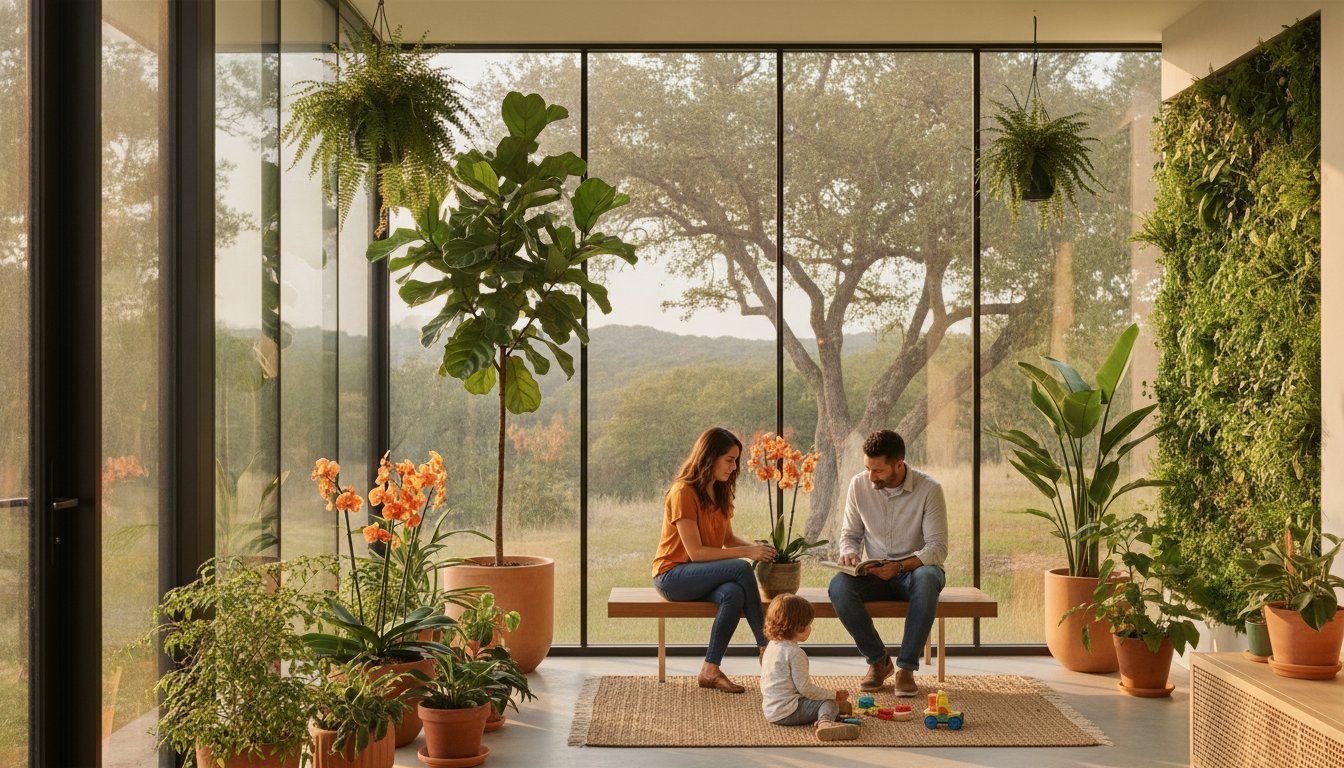
If you're planning a home office, a sunroom is the only viable choice. It provides the quiet environment and electronics protection you need to stay productive. For the "Grill Master" who loves outdoor cooking, a patio cover is often better. It allows smoke to dissipate quickly while keeping you dry during a sudden shower. Plant lovers should consider their specific greenery; a glass-walled sunroom acts as a greenhouse for tropical plants, while a patio cover provides the deep shade required for ferns and delicate Texas shade-growers.
Why ASunroom4You Is Your Texas Expert
With over 35 years of experience serving the San Antonio and Austin communities, we understand the unique environmental pressures your home faces. We offer maintenance-free solutions designed to look beautiful for decades without the need for constant painting or repairs. Our team takes pride in being a neighborly expert that solves your outdoor living frustrations with practical, high-quality installations. We handle the technical details of local building codes and permits so you can focus on enjoying your new retreat. We believe your home should be your sanctuary, and we're here to help you build it.
Take the Next Step Toward Your Perfect Outdoor Retreat
Making the final decision between a sunroom vs patio cover is the first step toward a more comfortable and functional home. Whether you choose the open shade of a patio cover or the climate-controlled peace of a sunroom, you're making a smart investment in your quality of life. We've spent over 35 years helping San Antonio and Austin homeowners overcome the heat and humidity with affordable, maintenance-free designs that last for decades. As licensed and insured Texas builders, we take the stress out of the construction process by handling the technical assessments and permits for you.
You don't have to settle for a backyard you can only use a few months out of the year. Let's work together to create a space where your family can relax and make memories in any weather. Get Your Free In-Home Estimate today and start enjoying your home to its fullest potential. We look forward to helping you transform your living space into the sanctuary you deserve.
Frequently Asked Questions
Does a sunroom add more value to a home than a patio cover?
A sunroom typically adds more total value to a home because it can be classified as conditioned living space if it meets specific heating and cooling standards. While patio covers offer a high percentage of return on investment, sunrooms fundamentally change the home's footprint. This shift often leads to a higher appraisal value during a resale compared to an open-air structure.
Can I convert my existing patio cover into a sunroom later?
It is possible to convert a patio cover into a sunroom, but it requires a professional assessment of your existing foundation. Sunrooms are much heavier than simple covers due to the glass wall systems and insulated roofing. If your current slab isn't reinforced to support that weight, you may need additional structural work before the conversion can proceed.
Do I need a building permit for a patio cover in San Antonio?
Yes, San Antonio building codes generally require a permit for any patio cover that is attached to the primary residence. These regulations ensure the structure meets local wind load and safety standards. Permit fees in Central Texas typically range from $200 to $1,500, and working with a licensed builder helps ensure your addition is fully compliant with city inspections.
How much cooler is it under a patio cover vs. direct sunlight?
Sitting under a patio cover can feel 10 to 15 degrees cooler than standing in direct sunlight because it blocks 100 percent of overhead UV rays. However, the air temperature remains the same as the outdoors. In the sunroom vs patio cover comparison, only the sunroom provides a true escape from the heat by sealing out the humidity and ambient temperature entirely.
Can a sunroom be cooled with my existing home AC system?
You can cool a sunroom by extending your existing HVAC ductwork or installing a dedicated ductless mini-split system. This allows the room to function as a seamless extension of your home's interior. High-performance glass helps maintain these temperatures by reflecting solar heat, ensuring your cooling system doesn't have to work overtime during a harsh Texas summer.
What is the average lifespan of a professional sunroom installation?
A professionally installed sunroom can last 30 years or more with minimal care. We use high-quality aluminum and vinyl materials that are specifically engineered to withstand the intense UV exposure and temperature swings common in Central Texas. These structures are built to be permanent architectural additions that remain structurally sound and aesthetically pleasing for decades.
Are sunrooms and patio covers maintenance-free?
Modern aluminum and vinyl outdoor structures are essentially maintenance-free for the homeowner. You won't need to worry about the regular sanding, staining, or repainting that wood structures require to prevent rot or sun damage. A simple occasional wash with a garden hose is usually all it takes to keep the frames looking like they did on installation day.
How long does it take to install a custom sunroom vs. a patio cover?
A custom patio cover typically takes three to five days to install, while a sunroom requires a more extensive timeline of two to three weeks. The sunroom vs patio cover installation process differs because sunrooms involve wall systems, electrical work, and precise glass fitting. Both timelines begin after the necessary local permits have been secured and materials are delivered to your home.
Comments