
The Ultimate Guide to a Custom Patio Cover with Lights and Fan

Why does your backyard feel like a furnace the moment the Texas sun hits the horizon? If you've spent a summer afternoon retreating indoors because your outdoor space lacks shade and airflow, you aren't alone. Many homeowners worry that a standard DIY kit will look cheap or, worse, fail during a high-wind storm. Investing in a professional patio cover with lights and fan is the difference between a wasted concrete slab and a functional micro-resort that adds real value to your property.
We understand the frustration of trying to entertain guests in the sweltering heat or total darkness. You deserve an outdoor living area that remains comfortable even in the middle of a San Antonio August. This guide will show you how to design a year-round retreat that handles the Texas environment with ease. We'll cover everything from structural fan beams and integrated LED lighting to the specific permit requirements in Central Texas. You're about to discover how to build a maintenance-free structure that stays cool, stays bright, and stays standing for decades.
Table of Contents
The Essentials of a High-Performance Patio Cover with Lights and Fan
Structural Integrity: Why Integrated Fan Beams and Wiring Matter
Choosing the Right Fixtures: Outdoor Ratings and Lighting Styles
Planning Your Project for the San Antonio and Austin Climate
Custom Design and Professional Installation with ASunroom4You
The Essentials of a High-Performance Patio Cover with Lights and Fan
A standard shade structure might block the sun, but it often fails to create a truly livable environment in the heart of Texas. When the humidity peaks in San Antonio or the air turns stagnant in Austin, a simple roof can actually trap heat underneath it. That's why a professional patio cover with lights and fan is considered a lifestyle-ready upgrade rather than just a construction project. Unlike a traditional Pergola which offers dappled shade, a solid-roof cover provides total protection from the elements. However, you can't just screw a heavy ceiling fan into a basic aluminum panel. Most standard covers lack the internal "spine" required to handle the weight and constant vibration of a motor. Without a dedicated fan beam, your beautiful new cover could eventually sag, rattle, or even suffer structural failure. Choosing a high-performance system ensures your investment is as durable as it is comfortable.
The Role of Airflow in Outdoor Comfort
Airflow isn't just a luxury; it's a physiological necessity during a Texas summer. A high-quality outdoor fan can make the air feel up to 10 degrees cooler by aiding the body's natural cooling process. In our region, a "natural breeze" is often non-existent when you need it most. Active airflow also serves as a chemical-free barrier against pests. Most mosquitoes are weak fliers. A consistent downdraft from a well-placed ceiling fan makes it nearly impossible for them to land on you or your guests. This turns your patio from a bug-filled chore into a comfortable retreat where you can actually relax.
Lighting Strategies for Modern Patios
The enjoyment of your home shouldn't end when the sun goes down. Most older homes rely on a single, harsh porch light that creates deep shadows and an uninviting atmosphere. Modern, integrated lighting changes the entire dynamic of your backyard. By building LED systems directly into the cover frame, we create a soft, multi-zone glow that extends the "golden hour" well into the night. This isn't just about aesthetics; it's a vital safety feature. Well-lit transitions between your back door and the patio floor help prevent trips and falls. This makes the space safer for children and elderly family members while creating a warm, professional look that increases your home's nighttime curb appeal.
Structural Integrity: Why Integrated Fan Beams and Wiring Matter
Building a high-quality patio cover with lights and fan requires more than just a sturdy roof. It requires an internal structural spine known as a fan beam. A fan beam is a reinforced steel or heavy-duty aluminum channel hidden inside the roof panels. Its primary job is to distribute the weight of the fan and, more importantly, absorb the constant vibration of the motor. If you attempt to mount a fan directly to the thin aluminum "skin" of a standard cover, you'll likely experience oil-canning. This is a loud, rhythmic popping sound caused by the metal flexing under stress. Over time, this stress leads to unsightly sagging and can even compromise the waterproof seal of your roof.
The Anatomy of a Fan-Ready Patio Cover
A professional installation identifies exactly where the load-bearing points are located. We don't just hang a fan from the ceiling; we secure the fan beam directly to the house header or the primary support columns. This ensures that the dynamic load—the weight of the fan plus the force it generates while spinning—is safely transferred to the ground. Modern high-volume fans can weigh between 25 and 50 pounds, so calculating these structural limits is non-negotiable. Using vibration-dampening mounts also prevents noise from transferring into your home's walls, keeping your retreat peaceful and quiet. If you want to ensure your structure is built to these rigorous standards, it's best to work with an expert patio cover builder who understands Texas wind and weight requirements.
Hidden Wiring vs. Surface-Mounted Conduits
One of the biggest differences between a professional project and a DIY attempt is how the electricity is handled. Cheap kits often require surface-mounted conduits. These are metal or plastic pipes bolted to the outside of the structure to hold the wires. They are eyesores that ruin the clean lines of your new living space. A premium patio cover with lights and fan uses internal raceways. These are built-in channels that allow the wiring to run through the heart of the beams, making the electrical system completely invisible.
Beyond aesthetics, hidden wiring is a matter of longevity. These internal channels protect your electrical components from the harsh Texas UV rays that can make plastic coatings brittle and prone to cracking. Following established outdoor electrical safety guidelines is essential for preventing shorts and fire hazards in a damp environment. By choosing a system with integrated raceways, you ensure your wiring stays protected from the elements and local pests, keeping your lighting and cooling systems running safely for decades. You should never see a stray wire on a professionally installed cover; the finish should be as seamless as the interior of your home.
Choosing the Right Fixtures: Outdoor Ratings and Lighting Styles
Style meets safety when you select the final fixtures for your patio cover with lights and fan. While the structural bones of the project are vital, the hardware you choose determines how much you'll actually enjoy the space. Many homeowners feel overwhelmed by the thousands of options available at big-box stores. However, the decision becomes much simpler when you prioritize engineering over aesthetics. In the Texas climate, your fixtures must handle high humidity and heat without warping or rusting. This is why we recommend moving beyond basic "outdoor" labels and looking for specific performance ratings that ensure your investment lasts for decades.
DC motors are the new gold standard for outdoor cooling. Unlike traditional AC motors, DC motors are incredibly energy-efficient and run almost silently. This is a game-changer for outdoor living. You want to hear the conversation with your family or the sound of the birds, not the constant hum of a struggling fan motor. These modern fans also offer more speed settings, allowing you to create a gentle breeze or a powerful gust depending on the temperature. Many of these systems now integrate with smart home hubs, letting you dim the lights or adjust the fan speed directly from your smartphone.
Damp-Rated vs. Wet-Rated: What Do You Need?
The biggest mistake homeowners make is buying an indoor fan for their patio. Even if the fan never gets hit by a raindrop, the humidity will cause standard MDF blades to droop and the motor to short out within a year. You must look for UL ratings. A damp-rated fan is designed for covered areas like a solid-roof patio cover. It can handle moisture in the air but not direct water. If your structure has exposed edges or you're building a more open design, a wet-rated fixture is necessary. These are hosedown-ready and feature sealed motors to prevent corrosion. When planning these electrical additions, it's a good idea to consult building permit requirements to ensure your project meets local safety codes for outdoor wiring.
Modern Lighting Aesthetics
Lighting should be felt, not just seen. The goal is to create a warm, inviting glow that mimics the interior of your home. We've seen a massive shift toward integrated LED recessed lighting, often called "puck lights," which are built directly into the ceiling panels of the patio cover with lights and fan. This creates a clean, architectural look that fan-mounted light kits can't match.
Color temperature is the secret to outdoor coziness. We recommend 3000K LEDs, which provide a soft, warm white light that isn't too yellow or too blue. It’s the perfect "sweet spot" for evening relaxation. You should also consider layering your light. Use dimmable ambient lighting for lounging and brighter task lighting if you have an outdoor kitchen or dining area. This flexibility allows you to shift the mood of your backyard from a bright family dinner to a soft, moonlit retreat with the touch of a button.
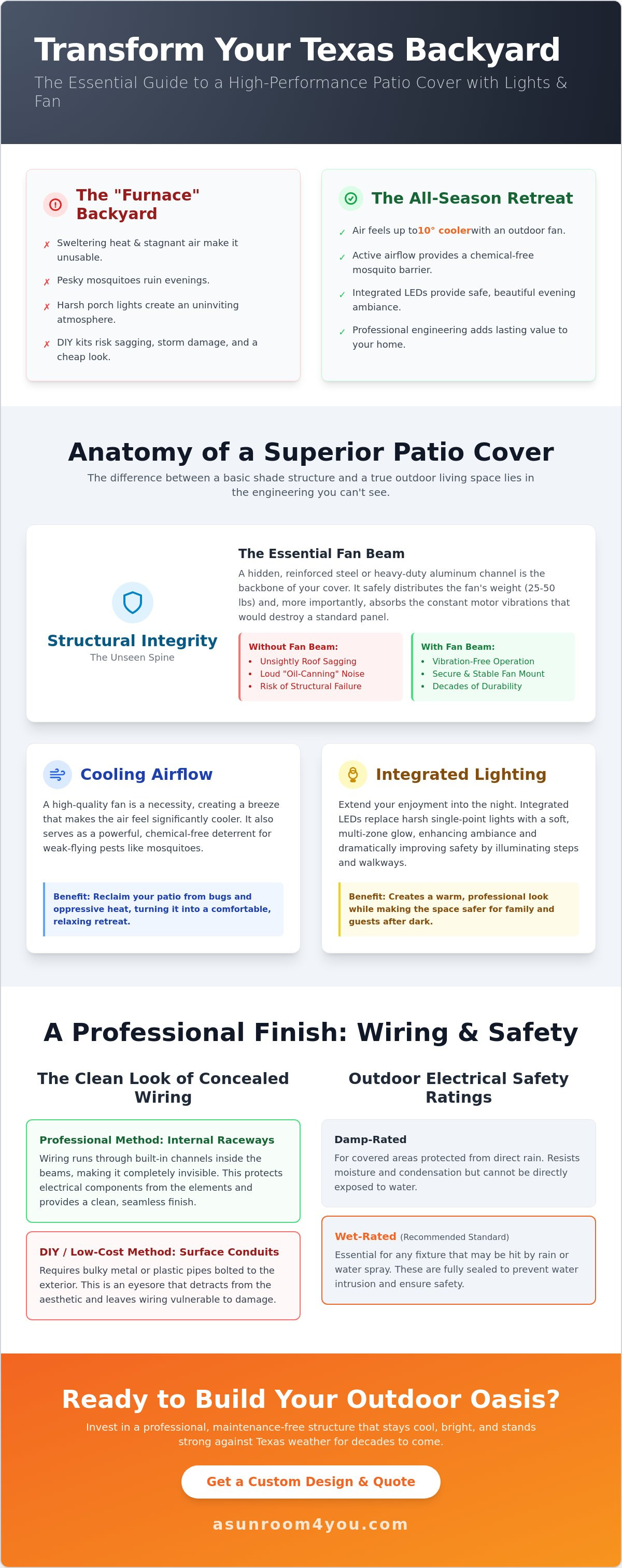
Planning Your Project for the San Antonio and Austin Climate
Planning your project for the San Antonio and Austin climate requires a deep understanding of local environmental stressors. You can't rely on generic kits designed for milder regions. A high-quality patio cover with lights and fan must be engineered to survive the sudden, intense wind gusts common during Hill Country storms. While national retailers might ship a product to your door, they rarely account for the specific wind load requirements that keep your family safe and your property protected. We focus on building structures that act as a permanent extension of your home, designed specifically for the Texas landscape.
Designing for the Texas Sun
The choice of material is your first line of defense against the heat. We highly recommend light-colored aluminum finishes because they act as a heat-reflective shield. Unlike wood, these maintenance-free materials won't peel or fade in 100-degree weather. We also prioritize the following design elements:
Insulated Roof Panels: These create a thermal break that blocks radiant heat from transferring to the space below.
Strategic Orientation: We position your structure to catch prevailing breezes, working in tandem with your ceiling fan to boost cross-ventilation.
Durable Finishes: We use high-grade coatings that resist the intense UV rays found in Central Texas.
Permits and Local Codes
Navigating the regulatory landscape in Bexar and Travis counties is often the most challenging part of any renovation. In San Antonio, the city follows the 2015 International Residential Code with specific local amendments. Most attached structures require a building permit. You must also respect setback requirements, which typically require structures to be at least five feet from side property lines and ten feet from the rear. Austin homeowners face even stricter regulations regarding impervious cover and the Wildland-Urban Interface (WUI) code, which may restrict the materials you can use in certain areas.
Skipping the permit process is a major risk. Unpermitted electrical work is especially dangerous; it can lead to insurance denials if a storm ever damages your home. ASunroom4You handles all the heavy lifting regarding paperwork and inspections so you don't have to. We ensure every patio cover with lights and fan we install is fully compliant with local safety standards. If you're ready to start your project with a team that knows local codes inside and out, contact us for a professional consultation today. We coordinate with licensed experts for the final electrical hookup, ensuring your new retreat is safe, legal, and built to last for decades.
Custom Design and Professional Installation with ASunroom4You
Choosing a patio cover with lights and fan is an investment in your home's value and your family's quality of life. While a national DIY kit might arrive in a box with generic instructions, it won't be tailored to your specific roofline or the unique wind patterns of your backyard. We believe you deserve a "done-for-you" experience that eliminates the stress of construction. With over 35 years of experience building for Texas homeowners, we understand that a patio isn't just a project; it's where your family gathers. Our team focuses on delivering a seamless transition from your interior living room to your new outdoor retreat.
We stand by our "No-Maintenance" promise. We use high-quality materials designed to last for decades without the need for sanding, painting, or staining. This isn't just about saving you time; it's about providing a structure that looks as good in ten years as it does on the day of installation. Our local expertise allows us to anticipate challenges that national retailers often ignore, such as the specific soil conditions in San Antonio or the strict impervious cover rules in Austin. When you work with us, you're choosing a partner who knows your neighborhood and your climate.
The ASunroom4You Advantage
Our approach is centered on three core principles: Quality, Reliability, and Longevity. We don't believe in "one-size-fits-all" solutions. Every patio cover with lights and fan we build is custom-designed to match your home's existing architecture. Whether you have a modern limestone exterior in Austin or a traditional brick home in San Antonio, our designs blend in perfectly. We focus on affordable, high-value outdoor living that fits your budget while exceeding your expectations for craftsmanship. You get the peace of mind that comes from professional engineering and a structure built to survive the toughest Hill Country storms.
Start Your Transformation Today
Are you ready to stop hiding from the Texas sun? The process begins with a simple, free in-home survey. During this session, we'll look at your existing space, discuss your goals for lighting and cooling, and provide a clear plan for your new installation. You won't have to worry about pulling permits or coordinating with multiple contractors. We handle every detail from the initial design to the final flick of the light switch. You can schedule your free estimate with ASunroom4You today to see how easy it is to reclaim your backyard. Let's build a retreat that keeps you cool and comfortable for many summers to come.
Ready to Reclaim Your Texas Backyard?
You've seen how the right infrastructure and high-quality fixtures can turn a sweltering concrete slab into a cool, inviting retreat. From the structural necessity of integrated fan beams to the long-term safety of UL-rated lighting, every detail matters when building for the Central Texas climate. A professionally installed patio cover with lights and fan isn't just about shade; it's about creating a maintenance-free lifestyle that stands up to Hill Country storms and intense summer heat.
ASunroom4You brings over 35 years of local experience to every build. As licensed contractors with an A+ BBB rating, we've successfully completed thousands of projects across San Antonio and Austin. We understand the local codes and weather patterns that national DIY kits simply ignore. We're committed to providing you with a space that offers lasting comfort, style, and durability. Get Your Free Quote for a Custom Patio Cover today and take the first step toward your new favorite living area. You don't have to spend another afternoon hiding from the sun. Let's build the outdoor sanctuary you deserve.
Frequently Asked Questions
Can I add a ceiling fan to an existing patio cover?
You can add a fan only if your existing structure includes a reinforced fan beam to support the weight and vibration. Mounting a fan to a standard aluminum skin without internal support will cause the panels to sag or rattle. Our team can inspect your current structure to see if it's fan-ready or if it requires structural reinforcements to handle the load safely.
Do I need a special type of fan for my outdoor patio?
You must use a fixture that is specifically UL-rated for outdoor environments to prevent rust and electrical failure. Indoor fans use materials that warp in the Texas humidity. For a high-performance patio cover with lights and fan, we recommend damp-rated models for covered spaces and wet-rated models for areas where blowing rain might reach the motor and blades.
Will a ceiling fan on my patio cover attract more bugs?
A ceiling fan actually acts as a natural deterrent for mosquitoes and other flying insects. Because these pests are weak fliers, the consistent downdraft from the fan makes it nearly impossible for them to land on you. While the lights may attract some nocturnal insects, the physical barrier created by the airflow significantly improves your comfort during the evening hours.
How much wind can a patio cover with a fan handle?
A professionally engineered patio cover is built to withstand local wind load requirements, which often reach speeds of 115 mph or higher in Central Texas. The key to survival is how the structure is anchored to your home's header and the ground. A properly secured fan attached to an internal beam will stay in place even during intense Hill Country thunderstorms.
Is it better to have recessed lights or a light kit on the fan?
Recessed LED lights generally provide a more sophisticated look and superior light distribution compared to fan-mounted kits. Integrated puck lights allow for multi-zone control, so you can dim the lounge area while keeping the dining space bright. This also prevents the flicker effect that can occur when fan blades spin beneath a single light source, creating a much more relaxing environment.
What happens if my outdoor fan gets wet during a storm?
If you have a wet-rated fan, it is fully sealed to handle direct rain and moisture without any issues. However, if a damp-rated fan is exposed to heavy blowing rain, it can lead to motor corrosion or electrical shorts. We design every patio cover with lights and fan with enough overhang and protection to keep your fixtures safe from the elements.
Do I need a permit to add a patio cover with electricity in Texas?
Most municipalities in San Antonio and Austin require a building permit for any attached structure. Because you are adding electricity, a separate electrical permit is also necessary to ensure the wiring meets the International Residential Code. We take care of all the paperwork and inspections for our customers, so you don't have to worry about the legal details of your project.
How long does it take to install a custom patio cover with lights and fan?
The actual on-site installation usually takes between two to four days once the design is finalized and materials are delivered. This timeline covers the structural assembly, the electrical wiring, and the final fixture installation. We prioritize a clean and efficient workspace to ensure your new outdoor retreat is ready for use with minimal disruption to your home and family schedule.
Comments