
The Ultimate Guide to Patio Covers for the Side of Your House in 2026

Is that narrow strip of land on the side of your home a functional asset, or is it just a "dead zone" where the Texas sun traps stagnant air? Most homeowners feel frustrated by this wasted square footage, yet they hesitate to build because they worry about a "cheap" looking addition. Finding the right patio cover for side of house layouts can be intimidating when you're also trying to navigate Dallas or Houston setback regulations. We understand that you want a reliable solution that adds real value without the stress of navigating complex building codes alone.
The good news is that you don't have to settle for a hot, unusable space. You can transform that area into a cool, dry retreat that feels like a seamless part of your home's architecture. In this guide, we'll show you how to navigate 2026 design trends and local wind load requirements, which often range from 90 to 130 mph in our region. You'll learn how a professional installation provides effective rain protection and can offer a 60 to 80 percent return on investment at resale. We'll walk you through the best materials for heat mitigation and the specific permit steps needed to ensure your new outdoor living space is both beautiful and compliant.
Table of Contents
What is a Side-of-House Patio Cover and Why Does Your Home Need One?
Many homeowners view the side of their house as a forgotten space. It is often a narrow strip of grass or gravel that gets baked by the afternoon sun, making it feel like a "dead zone." A specialized patio cover for side of house layouts changes this dynamic completely. These are narrow-profile structures engineered to attach directly to your home's exterior wall, providing a dedicated shield against the elements. Unlike standard backyard covers, these designs are optimized for the tight footprints common in modern Texas residential lots.
The "Texas Side-Yard" challenge is a real issue for residents in cities like Austin and San Antonio. Intense afternoon sun hits side walls with incredible force, often heating up interior rooms and driving up electricity bills. A side-yard cover acts as a thermal buffer. It transforms a high-maintenance area into a low-maintenance retreat that serves multiple purposes. Whether you need a shaded walkway, a protected zone for outdoor equipment, or a quiet dining nook, these structures unlock the full potential of your property. Understanding What is a Patio helps clarify that these additions are true extensions of your living space, even when they occupy a smaller footprint.
Key Benefits for Texas Homeowners
One of the most immediate advantages is the significant reduction in solar heat gain. By shading the side of your home, you protect windows and doors from direct UV exposure, which keeps your interior cooler. These covers also provide critical protection for side-entry doors during heavy rainstorms, preventing water from pooling near your foundation. It creates a comfortable, dry environment for pets to rest or for you to store expensive outdoor gear without worrying about weather damage.
Attached vs. Freestanding Side Covers
Most homeowners choose an attached patio cover for side of house because it offers superior structural stability and a seamless architectural look. Attaching the cover to the home's fascia or wall ensures it looks like an original part of the house, which is vital for maintaining property value. In some cases involving complex rooflines, a freestanding "lean-to" style might be necessary. This approach avoids complicated flashing issues while still delivering the shade and rain protection you need. Professional installation ensures that whichever style you choose, the result is a durable, integrated addition that matches your home's aesthetic perfectly.
Comparing Styles: Solid Roofs vs. Screened Side Enclosures
Choosing the right patio cover for side of house applications involves balancing aesthetic appeal with the practical realities of our local climate. While some competitors focus exclusively on high-end sliding shutters or louvered slats, these often fail to provide the total shade and rain protection that Texas families actually need. You have to decide if you want a simple overhead shield or a more enclosed space that offers protection from both the sun and the local pest population. Each style serves a different purpose for your narrow side-yard corridor.
Material choice is the first major decision you'll face. In the intense San Antonio humidity, traditional wood often requires constant sanding, staining, and repair. This is why we recommend maintenance-free aluminum for side-yard projects. It doesn't rot, warp, or invite termites; it simply stands up to the weather year after year. If you are unsure which style fits your layout, you can explore our full range of custom patio covers to see how they look on similar homes.
Solid Roof Patio Covers: Maximum Protection
A solid roof is considered the gold standard for homeowners who want 100 percent rain protection and total shade. These structures are engineered to handle heavy rain runoff and are rated for wind speeds between 90 and 130 mph, depending on your specific region. We often use insulated panels that are designed to keep the area underneath significantly cooler than the ambient temperature. You can choose finishes that match your existing shingles or opt for a sleek, modern aluminum look that complements a contemporary home design.
Screened Options for Side Yards
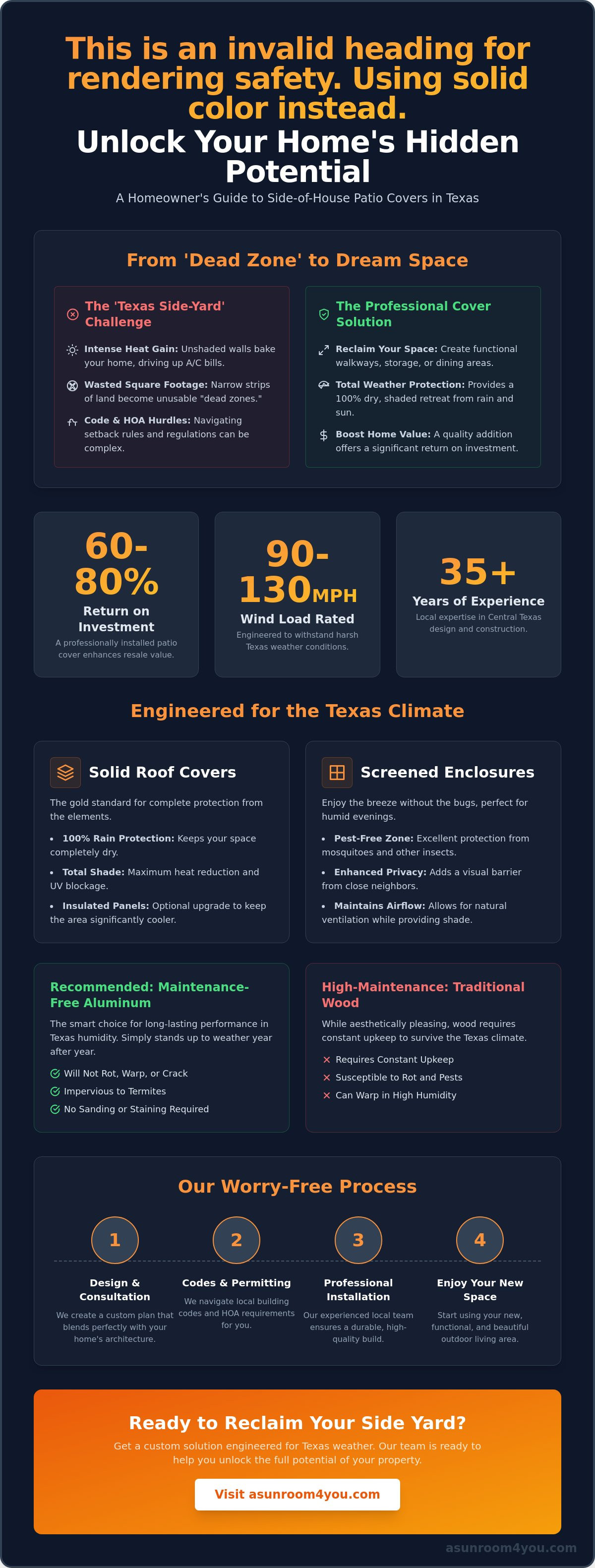
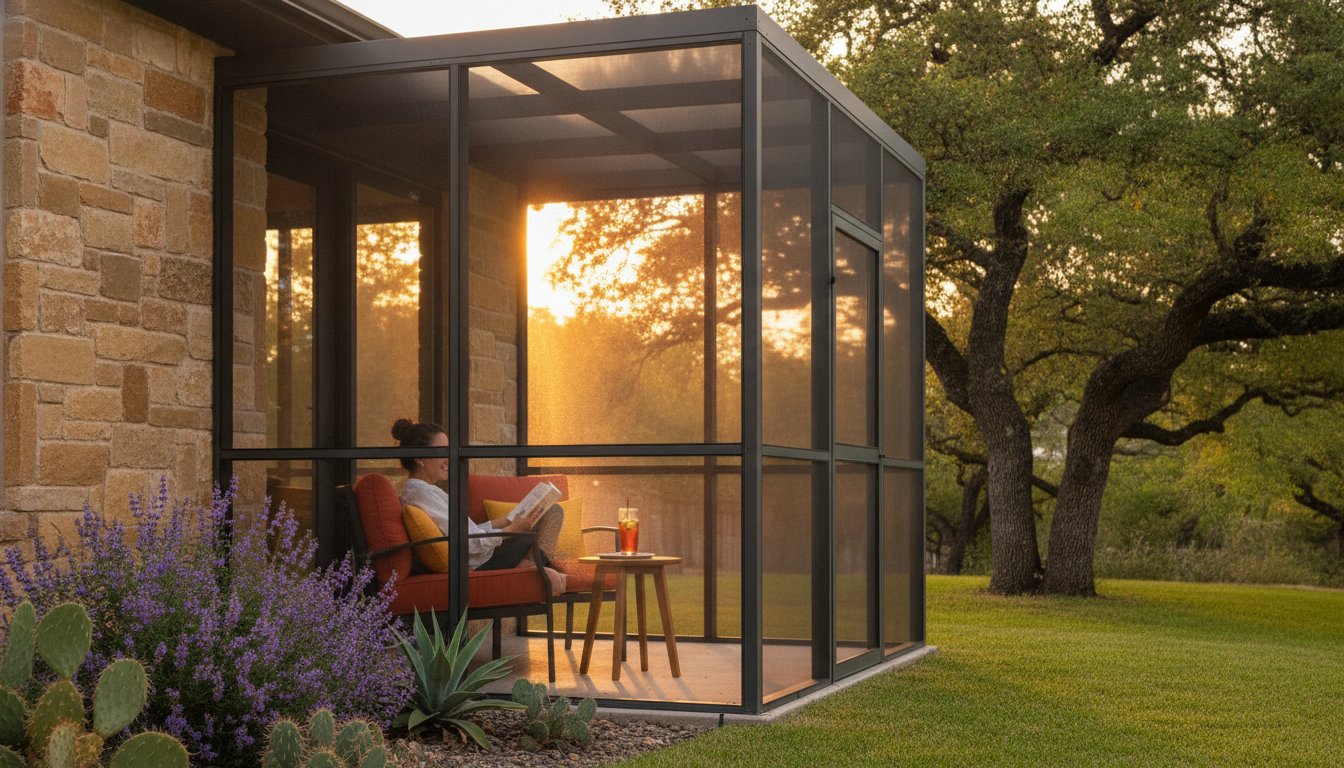
If your side yard is prone to mosquitoes or you want a bit more privacy from the house next door, a screen room is an excellent alternative. By converting a standard side patio cover into a screened-in space, you create a pest-free zone for morning coffee or outdoor storage. We offer privacy mesh options that block the "fishbowl" effect, making your narrow side yard feel like a private sanctuary. Many homeowners choose to integrate screen walls with a solid roof, giving them the best of both worlds: total weather protection and a bug-free environment. This combination effectively turns a "dead zone" into a high-value extension of your indoor living area.
Technical Considerations: Setbacks, Drainage, and HOA Rules
Building a patio cover for side of house layouts is significantly more complex than a standard backyard project. You aren't just dealing with aesthetics; you're working within tight physical and legal boundaries. In major Texas cities, side-yard setbacks are strictly enforced. These regulations dictate exactly how many feet must remain clear between your structure and the property line. For instance, in many North Texas municipalities, attached covers must meet the same 6-foot side setback as the main house. Ignoring these rules can lead to expensive fines or a forced removal of your new addition.
HOA approval is another critical step that homeowners often overlook. Neighborhood associations in San Antonio and Austin have specific rules regarding materials, colors, and even the angle of your roofline. They want to ensure that every addition looks like it belongs to the original structure. We specialize in navigating these board requirements, providing the documentation and professional renderings needed to get your project approved quickly. This prevents the "fishbowl" effect where a poorly planned addition draws the wrong kind of attention from neighbors or inspectors.
Our region is prone to severe weather, so structural integrity is non-negotiable. Most municipalities in Central Texas require patio covers to withstand wind speeds of 90 to 130 mph. This isn't just a suggestion; it's a safety requirement built into the 2021 International Residential Code (IRC) adopted by many local cities. We ensure every post and beam is engineered to meet these high-velocity standards, giving you peace of mind during storm season.
Navigating Local Building Codes
Securing a permit is the first hurdle. In Austin and San Antonio, any attached structure almost always requires a formal building permit. This process involves submitting detailed engineering plans that account for height restrictions and roof slopes. We recommend a professional site survey before you ever purchase materials. This identifies underground utility lines and precise property boundaries, preventing a project from becoming a legal nightmare. Our team handles the heavy lifting of code compliance so you don't have to.
Managing Water Runoff
Drainage is a vital concern when installing a patio cover for side of house corridors. In the narrow spaces between homes, there is very little room for water to go. Without proper engineering, heavy rain can pool against your foundation, leading to structural damage over time. We integrate custom gutter systems and strategic downspout placement into every design. This ensures that even during a Central Texas flash flood, water is channeled safely away from your home and your neighbor's property.
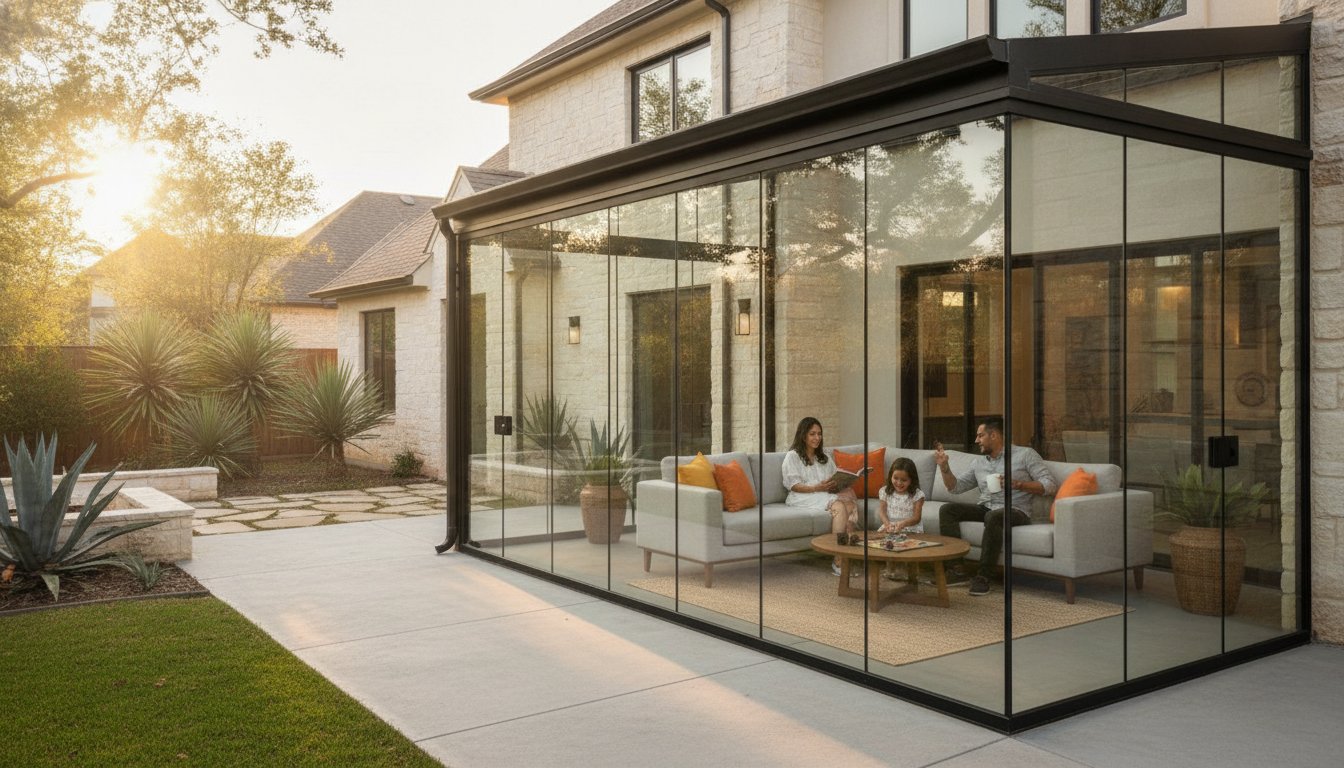
Design Essentials for Privacy and Texas Heat Mitigation
Designing a patio cover for side of house layouts requires more than just structural engineering. You also need to solve the two biggest challenges for Texas homeowners: the punishing heat and the lack of privacy in narrow suburban lots. While previous sections discussed the legal and technical requirements, the design stage is where you truly customize the space for your lifestyle. A well-planned cover does more than just block the sun; it creates a thermal break that protects your home's exterior walls from absorbing and radiating heat back into your living rooms. This is particularly important for homes with large side-facing windows that typically let in significant afternoon heat.
Integrated lighting is another essential design element. Many side yards are dark and uninviting once the sun sets. By adding low-voltage LED lighting into the beams of your patio cover, you transform a formerly "dead" space into a safe, usable evening walkway or a cozy nook for relaxation. This simple addition increases both the safety and the functional square footage of your property. If you want to see how these features look in real-world settings, explore our custom patio cover designs to find inspiration for your own home.
Privacy Solutions for Close Neighbors
In many San Antonio and Austin neighborhoods, side yards are narrow enough that you can practically reach out and touch your neighbor's house. This creates a "fishbowl" effect that makes many people feel exposed. We use decorative lattice or modern vertical slats to block sightlines without cutting off all natural light. You can also integrate roll-down shades into the structure. These allow you to adjust your level of privacy and sun protection throughout the day. By strategically placing support posts, we can help you maintain your own sightlines while effectively screening out the view of the house next door.
Cooling Your Side Patio
To combat the Texas sun, color and material selection are critical. We recommend light colors like whites, tans, or creams because they reflect solar energy rather than absorbing it. Insulated roofing panels are another essential feature. These panels act as a thermal barrier, keeping the temperature under the cover significantly lower than the ambient air. To keep air moving in these confined corridors, we often mount low-profile outdoor fans. This active ventilation prevents hot air from becoming trapped against the side of your house, ensuring the space remains comfortable even in July.
Professional Installation: Why ASunroom4You is the Right Partner
Transforming a narrow side yard requires more than just a set of tools; it requires a deep understanding of local environmental demands and structural engineering. ASunroom4You brings over 35 years of experience to every project in San Antonio and Austin. We specialize in creating affordable, maintenance-free solutions that are specifically tailored to the unique footprints of residential side yards. Our team of licensed and insured experts understands how to build for Texas weather. We ensure your investment stands up to the intense heat and high-velocity winds discussed in previous sections. You don't have to worry about navigating the complexities of construction alone when you have a neighborly expert by your side.
The ASunroom4You Process
Our full-service approach begins with a comprehensive assessment of your property. We don't believe in "one size fits all" solutions because every home has a different story. During the initial consultation, we assess your side yard's unique dimensions and identify any potential drainage or setback hurdles. Our designers then create a custom patio cover for side of house plan that complements your home's existing architecture. We even handle the heavy lifting of permit applications and HOA documentation. Once the design is finalized, our crew handles the installation with efficiency and respect for your schedule. We aim for a seamless transition that turns your "dead zone" into a functional retreat without the typical stress of home improvement.
Why Maintenance-Free Matters
While a DIY kit might seem tempting at first, the long-term value of a professional installation is unmatched. We use high-quality materials that won't rot, rust, or require repetitive painting. This is particularly important in the humid Texas climate where wood structures often fail prematurely or invite termite damage. By choosing a professional patio cover for side of house project, you avoid the common pitfalls of poor drainage and code violations. You get a durable, aesthetically pleasing addition that increases your property value without adding to your weekend chore list. Our materials are designed to look as good in ten years as they do on the day of installation.
Ready to reclaim your outdoor space? Schedule your free in-home survey with ASunroom4You today!
Start Your Side-Yard Transformation Today
Reclaiming that narrow strip of land on the side of your home is a smart way to increase your usable square footage. By installing a custom patio cover for side of house layouts, you solve the dual problems of intense Texas heat and lack of privacy. You don't have to settle for a dusty corridor. Instead, you can have a cool, shaded retreat that adds real value to your property.
With over 35 years of local Texas experience, ASunroom4You specializes in maintenance-free, high-durability aluminum designs. Our A+ rated customer service team in San Antonio and Austin is ready to guide you through every step. We take the guesswork out of home improvements, allowing you to focus on enjoying your new space.
Get Your Free Side Patio Cover Estimate Now
Your home deserves to be fully utilized from every angle. We look forward to helping you create the functional, beautiful outdoor retreat you've always imagined.
Frequently Asked Questions
Do I need a permit for a patio cover on the side of my house?
Yes, you almost always need a building permit for an attached structure in major Texas cities. Municipalities like Dallas, Houston, and San Antonio require permits to ensure the design meets safety codes and setback regulations. We handle the entire permitting process for our clients to ensure every patio cover for side of house project is fully compliant with local laws.
How much does a side-of-house patio cover typically cost?
The total investment for your project depends on several factors, including the square footage, material selection, and any custom features like integrated lighting. While wood is an option, many homeowners choose maintenance-free aluminum for its long-term value and durability. We provide a detailed, personalized estimate after assessing your side yard's unique footprint during an in-home survey.
Will a side patio cover increase my property value?
A professionally installed cover can significantly boost your home's resale value. In competitive markets like Dallas-Fort Worth, a well-designed covered patio often provides a 60 to 80 percent return on investment. Beyond the financial gain, it increases your home's usable square footage and curb appeal, which are major selling points for future buyers.
Can I install a side patio cover myself or should I hire a professional?
We strongly recommend hiring a professional for side-yard installations. These narrow corridors present unique challenges for water drainage and structural engineering that DIY kits simply can't address. A professional team ensures your structure meets local wind load requirements and navigates the complex setback rules that prevent legal issues with your neighbors or the city.
How do I maintain an aluminum side patio cover in the Texas heat?
Aluminum covers are famous for being incredibly low-maintenance, even in the punishing Texas sun. Unlike wood, they don't require regular sanding, staining, or painting to stay beautiful. You only need to rinse the structure with a garden hose occasionally to remove dust. It's also important to keep the gutters clear of leaves to ensure proper water runoff.
What is the best material for a narrow side-yard patio cover?
Powder-coated aluminum is the superior choice for narrow side-yard applications. It is lightweight, rust-proof, and won't warp or rot in the high humidity common in our region. Using insulated aluminum panels also provides a critical thermal break, which keeps the temperature under the cover much cooler than traditional wood or single-layer metal materials.
How long does the installation of a side patio cover usually take?
The actual on-site construction of a patio cover for side of house typically takes only one to three days. The total project timeline is often longer because it includes the time needed for HOA approvals and municipal permit processing. We work hard to manage these administrative steps efficiently so your installation can proceed as quickly as possible.
Can a side patio cover be converted into a screen room later?
Yes, many of our solid-roof designs are engineered to allow for a future conversion into a screen room. This flexibility is perfect if you want to start with a shaded retreat and add pest protection down the road. If you think you might want to enclose the space later, our designers can ensure the initial structure is ready for that upgrade.
Comments